Homeowners preparing to list property on the Outer Banks often focus on the listing price. However, the final payout depends entirely on the fees deducted at the closing table.
Understanding Seller Closing Costs in Kitty Hawk, NC, requires looking at state taxes, county-specific levies, and standard professional fees. By mapping out these expenses early, you can price your property accurately and project your final net proceeds.
Property values across the Outer Banks have settled into a steady rhythm for 2026. This stability makes calculating your final net proceeds easier than in previous years with rapid price fluctuations.
How Much Sellers Pay at the Closing Table
Sellers in Dare County typically pay between 6% and 10% of the home's final sale price in closing fees. This percentage covers everything from real estate agent commissions to local administrative charges.
These expenses are deducted directly from the sale proceeds by the closing attorney. You do not need to bring a check to closing to cover these standard transaction costs.
During the escrow period, the closing attorney compiles a settlement statement outlining every debit and credit. This document ensures you see exactly how much of your home's equity goes toward transaction fees before you sign the final paperwork.
Sellers should review this settlement statement a few days before the official closing date. Catching minor calculation errors early prevents delays in funding your bank account.
Buyers and sellers frequently negotiate who pays specific administrative fees during the contract phase. While some charges fall entirely on the seller by law, others can shift depending on the terms of the purchase agreement.
Standard Transaction Fees for Outer Banks Sellers
Selling real estate in North Carolina involves specific state-mandated taxes that differ from neighboring states. Dare County also implements its own local revenue measures that directly impact your bottom line.
The total cost to sell a house breaks down into several distinct categories. Professional service fees and government taxes make up the bulk of the deductions.
Understanding these local mandates helps you evaluate purchase offers more accurately. A high offer might look appealing, but you should calculate the corresponding tax burden to determine its true value.
- Real estate agent commission: This remains the largest individual expense, generally ranging from 5% to 6% of the sale price. Sellers pay the total commission from their proceeds, which the closing attorney then splits between the listing brokerage and the buyer's brokerage.
- North Carolina excise tax: The state charges a mandatory transfer tax of $1 per $500 of the sale price. This equates to a flat 0.2% tax applied to the final contract price of the home.
- Dare County land transfer tax: Dare County levies an additional local tax of 1%, calculated as $1 per $100 of the sale price. This local tax funds county infrastructure and services.
- Attorney fees and title charges: Sellers pay local attorney fees for document preparation, including drafting the new deed. Sellers also cover a prorated portion of the year's property tax, calculated up to the day of closing.
Homeowners Association Charges to Factor In
Many single-family homes and coastal condos near the Kitty Hawk Woods Coastal Reserve belong to homeowners associations. Transferring these properties requires paying specific administrative fees to the HOA management company.
Sellers must pay an HOA transfer fee to update the property records and hand over the account to the buyer. These transfer fees locally range from $100 to $300 on average.
Providing the buyer with current HOA rules, financial statements, and meeting minutes requires administrative work. Management companies charge document preparation fees to assemble these mandatory disclosure packets.
Buyers review these documents during their due diligence period to understand the community rules. If your community assesses special assessments for upcoming repairs, you may need to pay those off entirely before transferring the title.
You will also owe prorated HOA dues calculated up to the exact day the property changes hands. If you have already paid your dues for the month or year, the buyer will credit you for the remaining days at closing.
Sellers should contact their HOA management company as soon as the property goes under contract. Requesting the transfer documents early prevents last-minute delays at the closing table.
Estimating Your Net Proceeds on Local Properties
Running the numbers on hypothetical sales helps clarify how these percentages translate into actual dollars. Because the Dare County land transfer tax applies uniformly, you can scale these estimates to match your specific listing price.
Your exact net proceeds will also depend on your remaining mortgage balance and any outstanding home equity lines of credit. The closing attorney pays off those primary debts immediately after deducting the standard transaction fees.
Below are two examples showing the base transaction costs for different property types in the area. These estimates assume a standard 5.5% real estate agent commission and $400 in seller attorney fees.
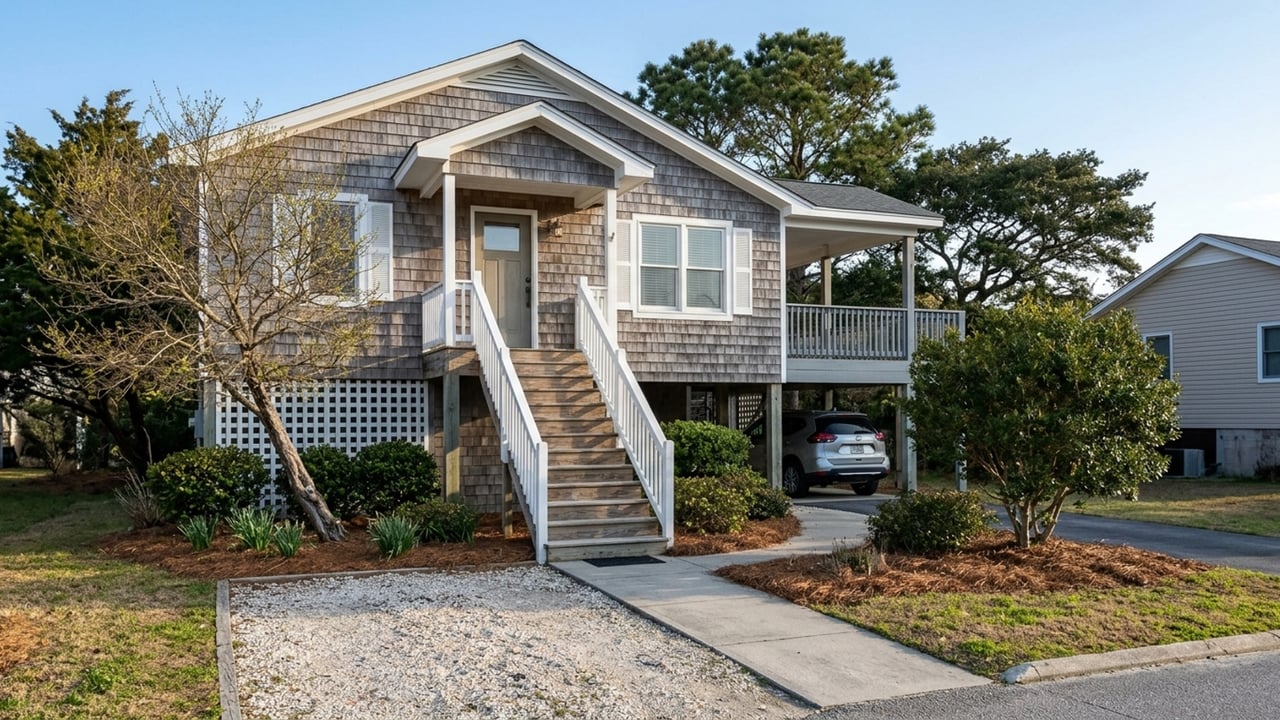
- Single-family home: On a median-priced $650,000 property, the combined 1.2% transfer tax equals $7,800. A 5.5% agent commission adds $35,750, and attorney fees add $400, bringing the base closing costs to $43,950.
- Coastal condo: For a $400,000 unit, the combined state and county transfer tax totals $4,800. The 5.5% commission takes $22,000, and attorney fees add $400, resulting in $27,200 in base closing costs.
How Property Location Influences Buyer Negotiations
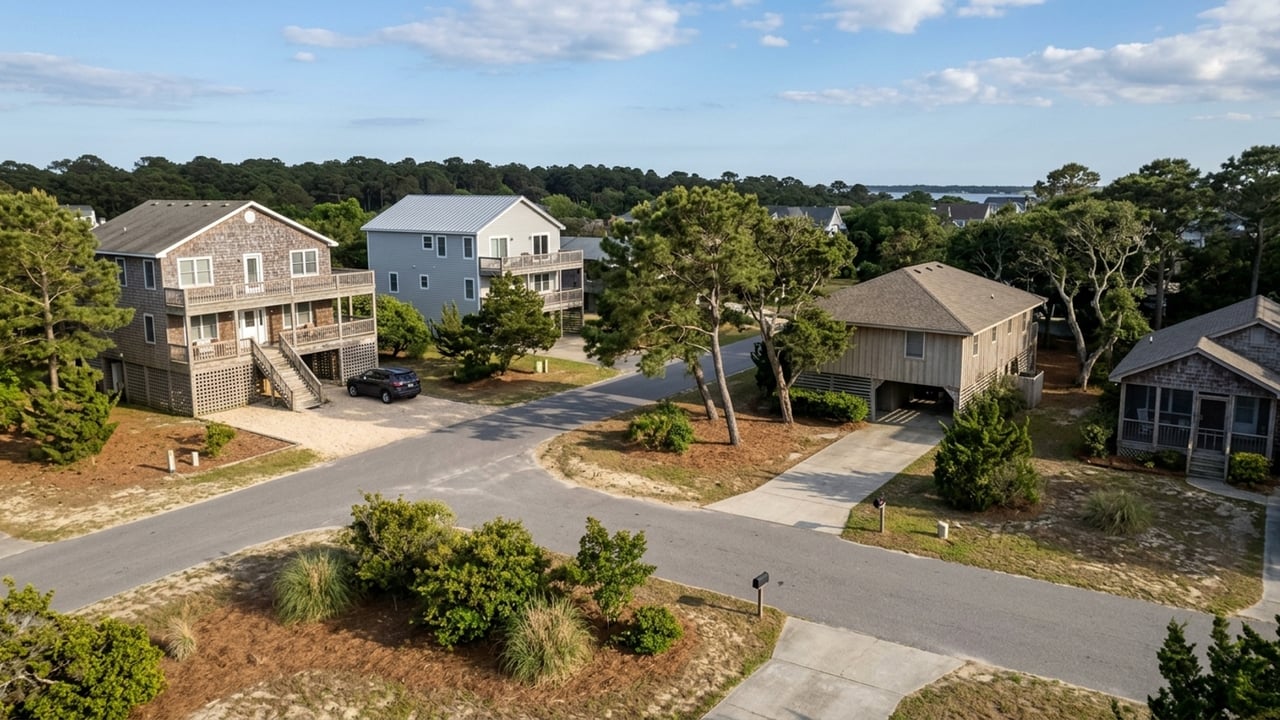
A property's specific location within Kitty Hawk, NC, dictates market demand and buyer negotiation power. Homes positioned closer to Outer Banks public beach access points generally command stronger offers with fewer requests for seller concessions.
Investors purchasing vacation rentals near the beach often focus on projected rental income rather than asking for closing cost assistance. These buyers typically bring larger down payments and have the cash reserves to cover their own transaction fees.
Properties located further inland along US-158 appeal to year-round residents prioritizing commute times and proximity to Dare County Schools. Buyers in these areas often ask sellers to cover a portion of their closing costs to offset rising mortgage interest rates.
Primary home buyers looking near the Kitty Hawk Woods Coastal Reserve face different financial pressures. These buyers are often managing the logistics of selling a previous home while securing a new primary mortgage.
When interest rates fluctuate, local buyers frequently ask sellers to buy down their mortgage rate through a closing cost credit. Agreeing to this concession reduces your net proceeds but can secure a reliable buyer for your property.
Sellers should discuss concession strategies with their listing agent before the property hits the market. Building a small buffer into your asking price can give you the flexibility to grant these requests later.
Frequently Asked Questions
Who pays the transfer tax in Dare County?
The seller customarily pays both the North Carolina excise tax and the local land transfer tax. In Dare County, these two taxes combine for a total rate of 1.2% of the final purchase price. Buyers do not typically cover this expense unless specifically negotiated in the contract.
Are real estate agent commissions negotiable in Kitty Hawk?
Yes, agent commissions are entirely negotiable between the seller and the listing brokerage. While the local average hovers around 5% to 6%, sellers listing high-value oceanfront properties often discuss adjusted rates with their representation.
When do sellers pay closing costs in North Carolina?
Sellers cover their transaction fees on the day the property officially changes hands. The closing attorney deducts all taxes, commissions, and fees directly from the buyer's funds before wiring the final net proceeds to the seller's bank account.