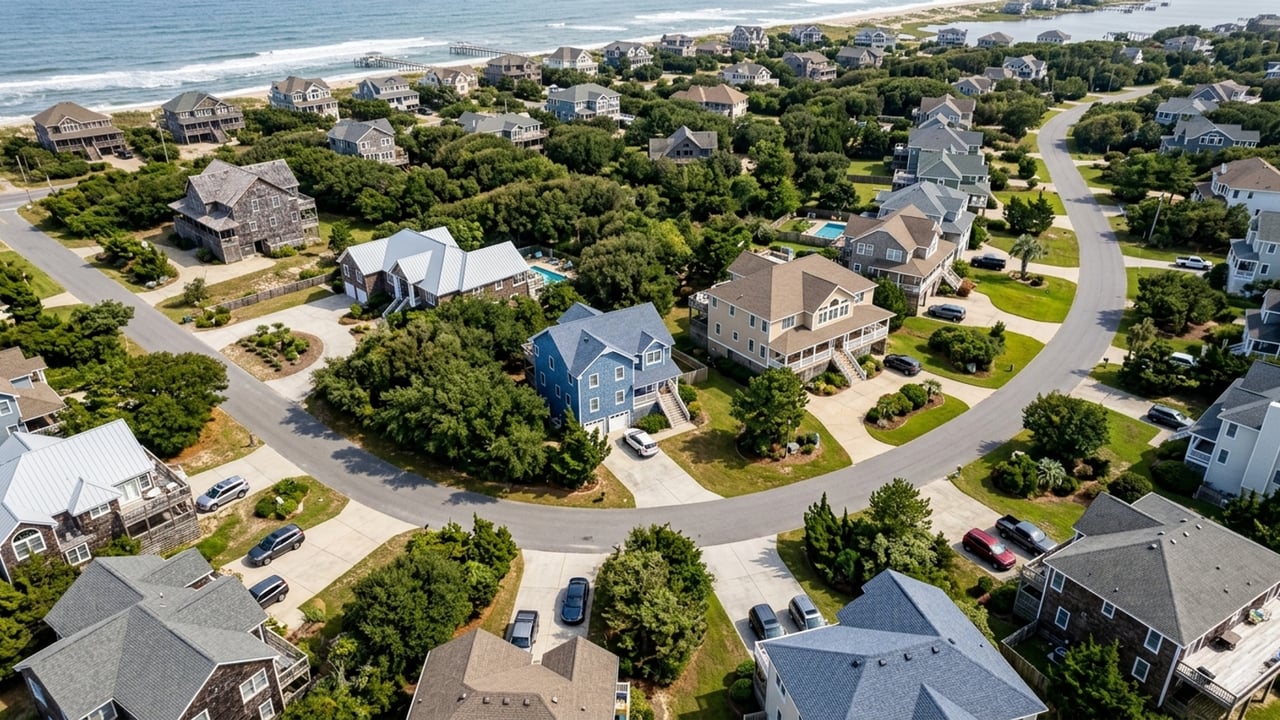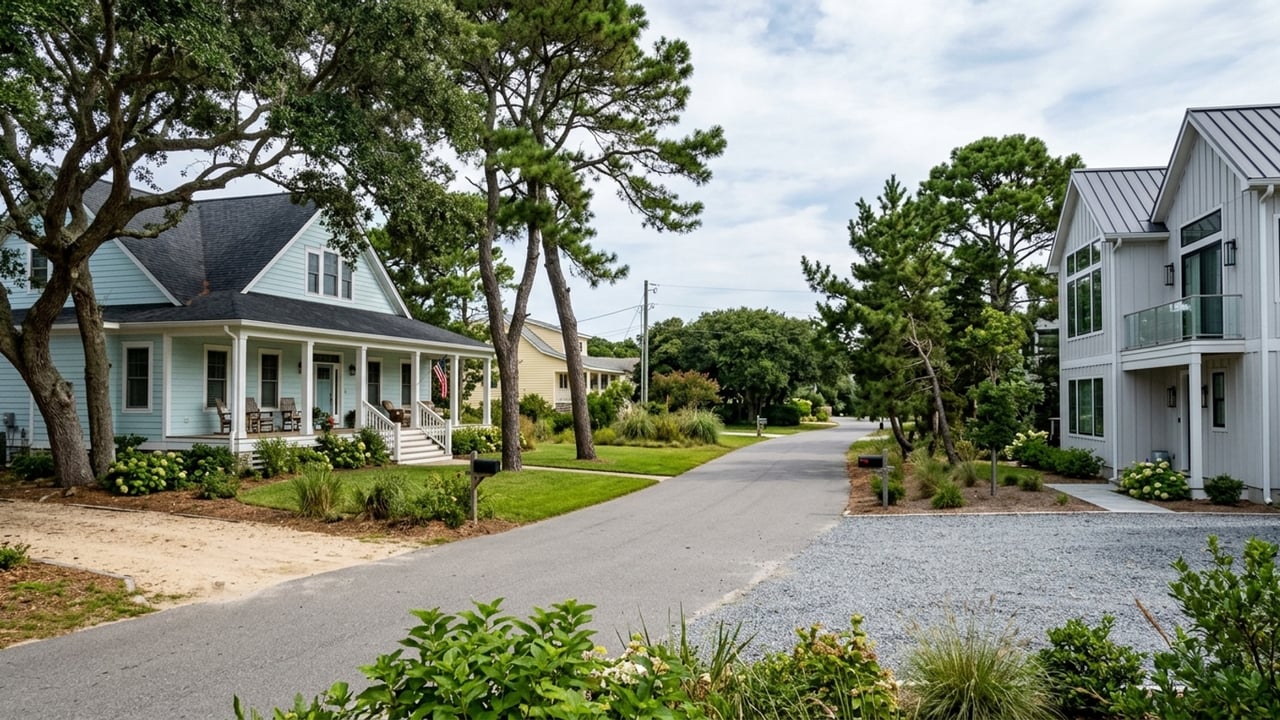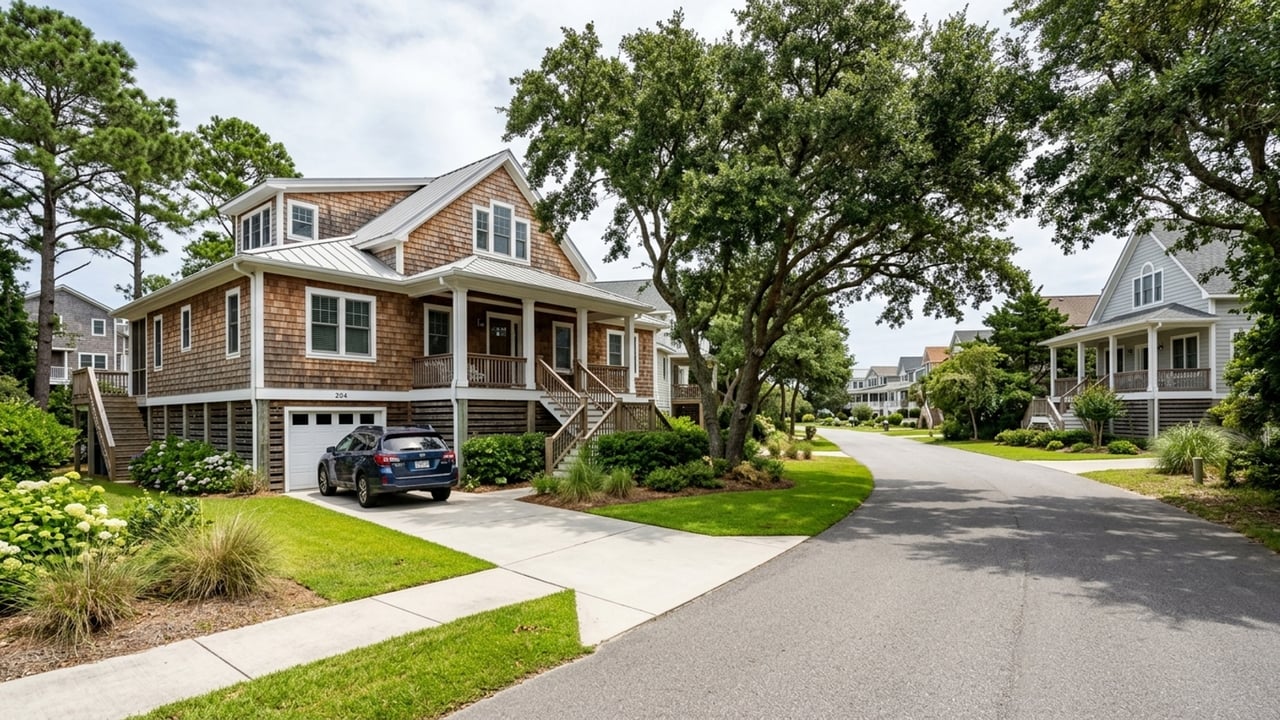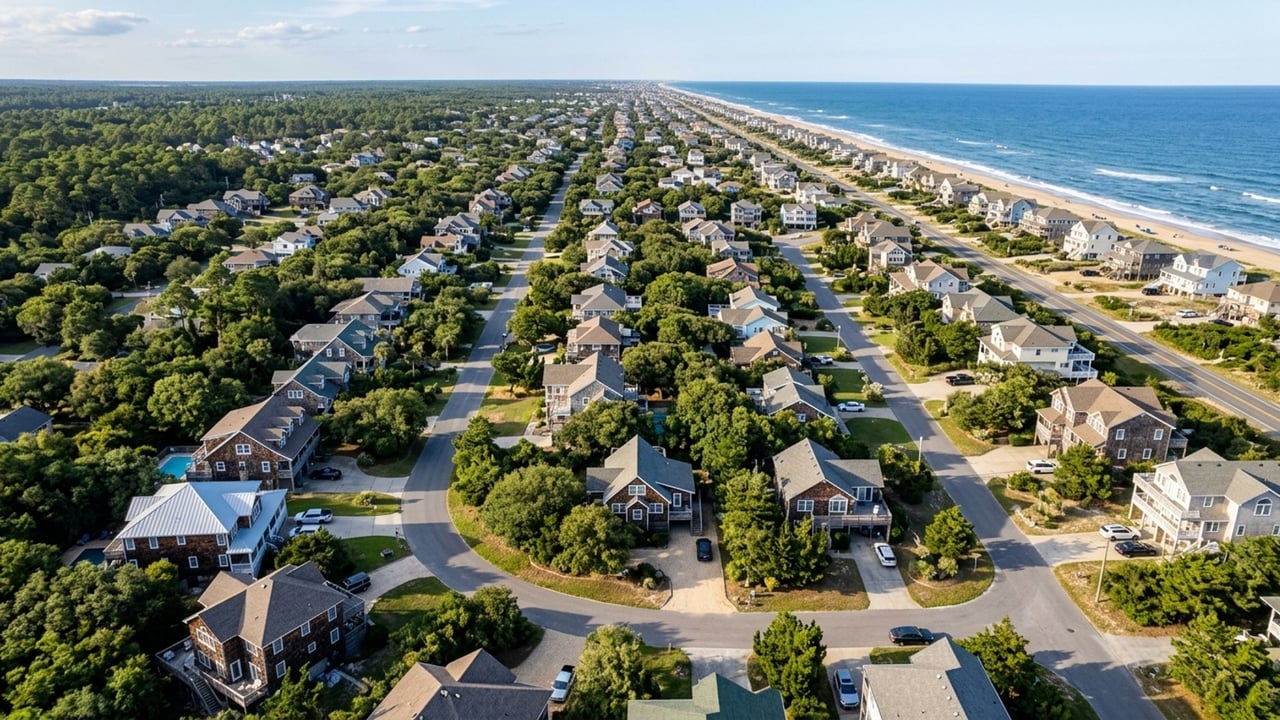
The median home price in the Kitty Hawk, NC housing market sits around $720,000 right now. With roughly 42 active listings on the market, finding the exact layout, elevation, and beach access you want is genuinely difficult and often impossible.
When existing Outer Banks real estate doesn't fit, building starts to look like the rational choice. That said, constructing a home on the Outer Banks isn't like building inland. Coastal weather, specialized foundations, and Dare County's zoning requirements add layers to the process that catch unprepared buyers off guard. Knowing what you're walking into helps you decide whether this path actually fits your goals - or just sounds appealing.
Typical Costs for Building a Home in Kitty Hawk
What you'll spend depends on three things more than anything else: where the lot sits, what kind of foundation it needs, and what materials you select. Coastal construction carries a real premium over inland North Carolina. Wind zone requirements and elevated foundations aren't optional extras - they're the baseline.
Spread those fixed site costs across 2,000 or 3,000 square feet, and your price per square foot tends to settle. A 1,200-square-foot beach box still requires the same utility hookups, permits, and heavy equipment access as a much larger house. It's one reason why going slightly larger sometimes pencils out better than you'd expect.
Location within the 27949 ZIP code also moves the needle significantly. Oceanfront and semi-oceanfront lots require more robust piling systems and stricter weatherproofing. Lots further west toward the sound may offer more shelter, but don't assume that means easier - different soil conditions and drainage challenges can create their own complications.
Whatever number you're working with, add a contingency of at least 10 to 15 percent. Material costs shift. Specialized coastal labor gets delayed. Having that buffer means you don't have to make structural compromises to stay solvent.
Where Your Construction Dollars Go
The house itself is only part of the budget. A meaningful share of your money goes into the ground and into the engineering before a single wall goes up.
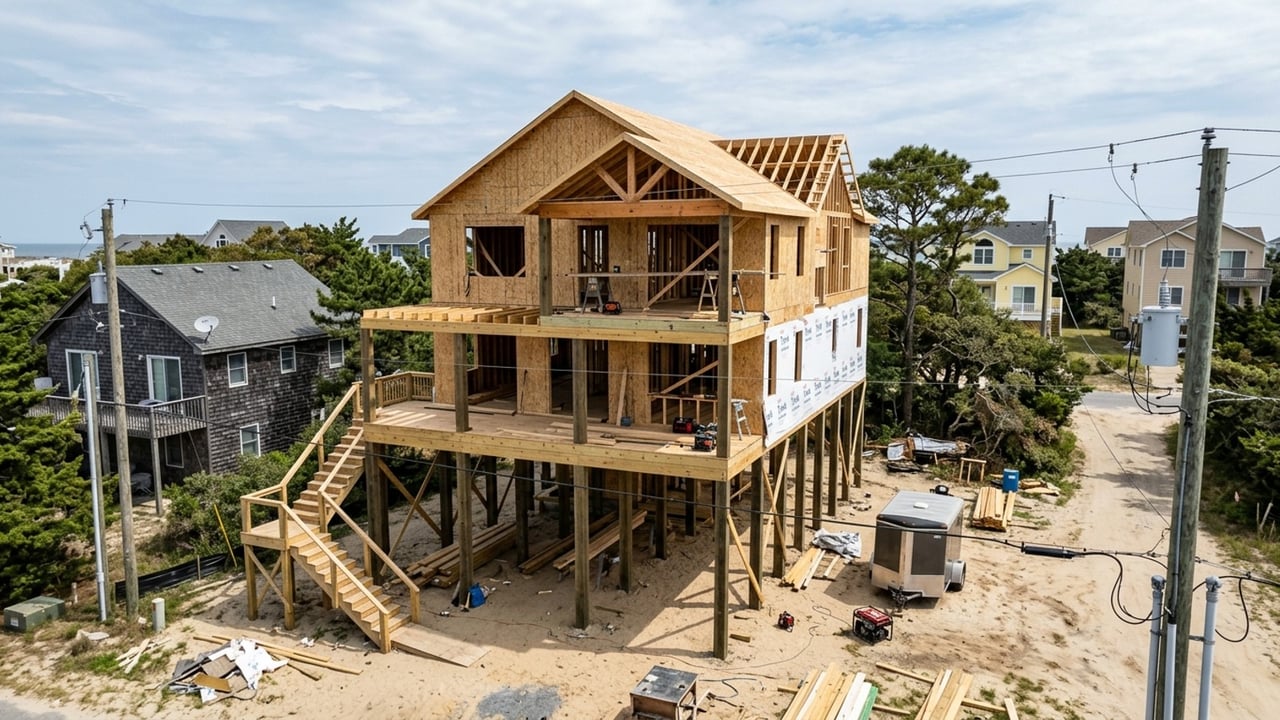
The foundation is usually one of the largest early expenses. Most homes in the Outer Banks require driven wooden or concrete pilings to raise the living space above flood zones - the depth and number determined by soil composition and the structural load of the home you're building. This isn't the place to value-engineer.
Framing and materials eat up another major portion. You'll need impact-rated windows, stainless steel or specially coated fasteners that won't corrode in salt air, and high-wind siding. These cost more upfront. They also meet local code and tend to lower your long-term insurance premiums, so think of them as required rather than optional upgrades.
Land Acquisition and Site Prep
Vacant land in the Town of Kitty Hawk is limited, and pricing reflects how close you are to the water and how high the elevation sits. The lot comes first, both in sequence and in cash out the door.
Once you own the lot, site prep means clearing vegetation, grading, and establishing utility connections. If your lot sits on a high water table - common here - or needs a complex septic design or significant fill dirt, those early costs climb before you've touched the structure.
Dare County Permits and Labor
The Dare County building department reviews your plans against local coastal regulations. Expect fees for building, electrical, plumbing, and mechanical permits, and potentially environmental reviews depending on the lot.
Labor runs higher here than the state average. The contractor pool is smaller, the work requires real familiarity with coastal building techniques, and scheduling subcontractors takes longer than it would inland. That affects your timeline as much as your budget.
Comparing the Cost to Build Versus Buy
Existing homes in Kitty Hawk are currently spending an average of 114 days on the market, which gives you time to think. But with only around 42 active listings, thinking doesn't always get you what you need.
Buying an existing home locks in your cost upfront and gets you into the property without managing a construction timeline. You also avoid the carrying costs of a construction loan. The catch is that older beach homes frequently need expensive updates - roofs, HVAC systems, siding - to hold up in this environment. "Move-in ready" on the Outer Banks deserves some scrutiny.
Building new lets you spec modern energy efficiency, current hurricane-rated materials, and a floor plan that actually works for how you live. The final cost may exceed what you'd pay for an older home. Over time, lower maintenance and better insurance rates on a new structure can narrow that gap, though how much depends on your specific situation.
The honest answer is that it usually comes down to timeline and what's available. If you can't find what you want in 42 listings, and you have the flexibility to ride out a construction schedule, building is how you guarantee the outcome.
Steps to Constructing Your Own House
Getting from a vacant lot to a finished home means coordinating with multiple agencies and professionals in sequence - you can't run most of these steps in parallel.
Start with the land, and be methodical about it. Not every lot can support the footprint you want or a standard septic system. Make your purchase contingent on a successful soil evaluation and site survey. This isn't overcaution; it's how you avoid buying a lot that legally can't support a house.
Once you own the lot, finalize your architectural plans and line up financing. Construction loans work differently than standard mortgages - funds release in phases tied to completed milestones, not all at once. Your lender will want detailed plans and a signed contract with a licensed builder before the loan gets approved.
Working With the Dare County Building Department
Before anything goes in the ground, your plans go through the Dare County building department for review against wind zone standards, flood elevation requirements, and setback rules. This is not a formality.
County inspectors will visit the site throughout the build - framing, electrical, plumbing - and the project can't advance to the next phase until each inspection passes. A general contractor who knows the county's process doesn't just keep things moving; they help you avoid the delays that come from being surprised by what an inspector flags.
Choosing a Local General Contractor
This decision matters more than almost any other on a coastal build. Managing moisture during construction, sourcing materials rated for salt spray, understanding the county's inspection rhythm - these aren't skills you improvise. An experienced Outer Banks contractor already has working relationships with reliable subcontractors and knows what to anticipate before problems show up on your job site.
Frequently Asked Questions
How much does it cost per square foot to build a custom home in Kitty Hawk, NC?
It depends on what your specific lot requires - piling depth, wind-rating standards, and finish quality all move the number considerably. A local builder who can look at your lot details will give you a far more accurate estimate than any general range.
Do I need a CAMA permit to build on a vacant lot in Kitty Hawk?
It depends on where the lot sits. Properties near the oceanfront, sounds, or coastal wetlands typically fall under the Coastal Area Management Act (CAMA). If your lot is in one of those areas, you'll need a CAMA permit before construction can begin.
How long does the entire home building process take in Kitty Hawk from permitting to move-in?
Contractor availability and weather both affect this, so timelines vary. Permitting and site prep alone can take several months, and that's before the actual build begins. Plan for the full process - from initial lot purchase to move-in - to take a year or more.
What happens if the Kitty Hawk land I buy fails its septic perk test?
A failed perk test means you can't install a conventional septic system. An alternative engineered system may be possible, but it costs more to design and install. If no system gets approved, the lot can't support a residential dwelling - which is exactly why you make the purchase contingent on that test passing.
Is it generally cheaper to buy an existing beach house or build a new one in Kitty Hawk?
Buying existing is usually cheaper upfront - the median sale price in Kitty Hawk is around $720,000. Older homes, though, may need immediate renovations and tend to carry higher insurance premiums. Building new means starting with modern, weather-resistant materials that can reduce long-term maintenance costs, though the initial price tag will likely be higher.
What are the down payment requirements for a construction loan on a Kitty Hawk vacation home?
Construction loans typically require more down than a standard mortgage. For a second home or vacation property, lenders often want 20 to 30 percent down. The exact figure depends on your lender's policies and your financial profile.