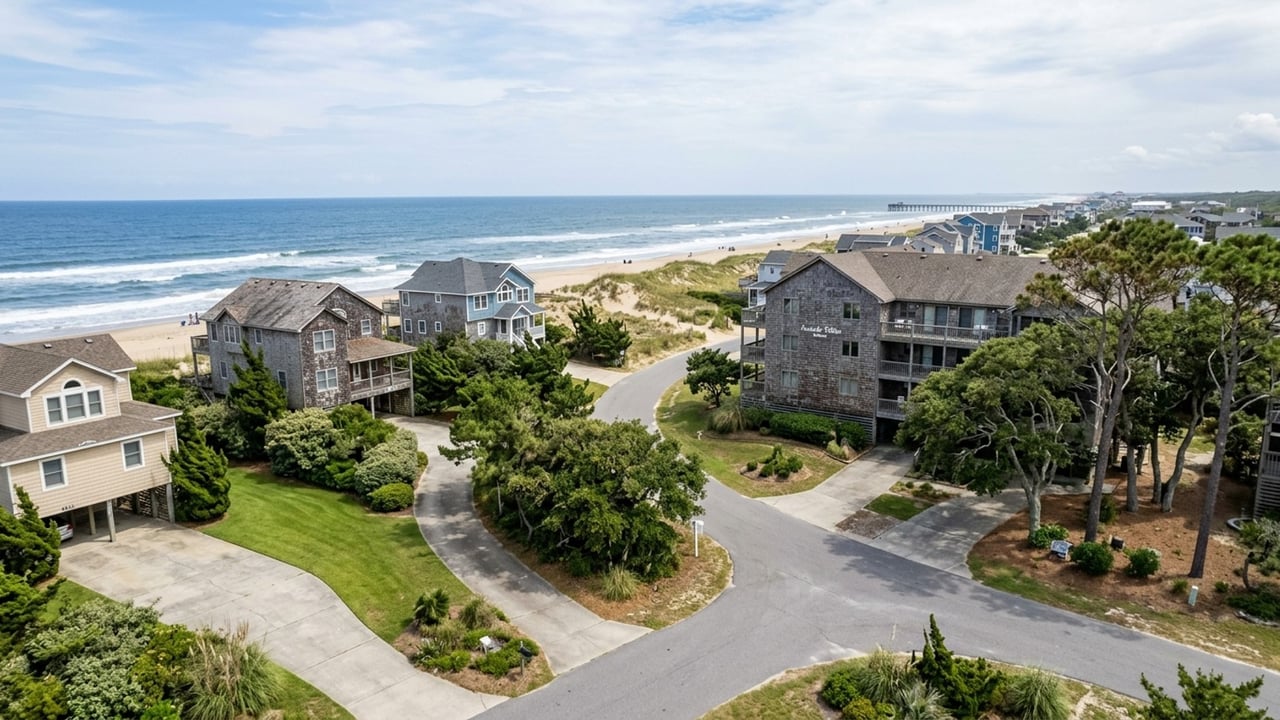
If you're buying in the Kitty Hawk, NC housing market right now, the median home sale price is around $720,000, homes are sitting on the market roughly 114 days, and there are 42 active listings as of mid-2026. That inventory gives you time to think - and one thing worth thinking through carefully before you make an offer is the full monthly cost of ownership, not just the mortgage.
For a lot of properties in Dare County, homeowners association dues are a meaningful line item. Understanding what those organizations charge and what you actually get for it can save you from a genuinely unpleasant surprise after closing.
Typical Homeowners Association Costs in Kitty Hawk
Fees in the 27949 ZIP code span a wide range depending on property type and amenities. A small subdivision with minimal shared infrastructure might charge a few hundred dollars annually. An oceanfront condominium complex can run several hundred dollars a month. Those aren't close to the same number.
Get this figured out early in the mortgage process. Lenders count your association dues alongside principal, interest, taxes, and insurance when they calculate your debt-to-income ratio - so a fee you dismiss as a rounding error can genuinely affect how much house you qualify for.
Condo vs. Single-Family Community Dues
Condominiums carry higher dues because the association owns the building exteriors, roofs, and shared hallways - maintaining all of it falls on the budget. Single-family communities typically limit themselves to shared roads, entrance signage, and common amenities like pools or tennis courts.
The coastal setting matters here. Salt air and strong winds wear down siding, decking, and roofing faster than you'd see on an inland property. If the association handles exterior upkeep, that accelerated deterioration has to be priced into the budget.
How Kitty Hawk Compares to the Region
Kitty Hawk is part of the Kill Devil Hills Micropolitan Statistical Area, which falls within the larger Virginia Beach-Chesapeake Combined Statistical Area. Association dues here tend to track with other coastal Dare County towns - higher than the North Carolina state average, mostly because weather-related maintenance costs more.
Inland communities don't deal with the same salt spray or hurricane exposure, so their insurance and repair reserves sit lower. If you're relocating from somewhere landlocked, expect a higher baseline. That's not mismanagement - that's the coast.
Billing Cycles for Local Associations
This depends entirely on what the governing documents say, and it varies more than people expect.
Single-family subdivisions in Kitty Hawk often bill once a year - many collect the full amount in January to cover the year's landscaping and administrative costs. Condominium associations and communities with larger amenity packages typically bill monthly or quarterly, since breaking a bigger number into smaller installments is easier for residents to absorb alongside the higher maintenance demands of building upkeep.
What Your Dues Pay For in Dare County
A standard association budget works in two directions at once. The operational portion handles immediate expenses - landscaping for common areas, pool maintenance, trash collection, and liability insurance for shared spaces. The other piece goes into a reserve fund, which functions essentially as a savings account earmarked for major future repairs.
A healthy reserve is what lets a community replace a clubhouse roof or resurface a parking lot without turning to homeowners for extra money. When you're evaluating a community, that reserve balance tells you a lot about how the board operates.
Common Area Maintenance and Amenities
Communities with pools, private beach accesses, or fitness centers spend a significant share of their budget on upkeep and liability coverage. If the neighborhood includes private roads, the association takes on paving and pothole repair as well.
A single-family neighborhood with minimal amenities might only be paying to mow grass at the entrance and keep a sign standing. Before you commit, make sure you're comfortable paying for specifically what this community offers - not what you wish it offered.
Reserves and Storm Preparation
Coastal associations need serious reserve funds. Nor'easters and hurricanes are not theoretical concerns here, and when they hit shared property, the repair bills are real. State law requires associations to manage their finances responsibly, but the exact reserve amount varies by neighborhood - the law sets expectations, not a specific floor.
When you review the association's financial documents, look for a recent reserve study. That document lays out the expected lifespan of shared components and whether the current savings rate will actually cover future replacements. If there isn't one, or if it's years old, that's worth flagging.
Additional Charges to Anticipate
Dues aren't the only line item you'll see at closing. Transfer fees are common - the property management company charges them to update ownership records and set up the new billing account. It's administrative, but it's real money.
Some communities also collect a capital contribution or initiation fee when a new owner buys in. This is usually a flat amount or the equivalent of a few months of dues, and it flows directly into the reserve fund rather than covering paperwork.
Special Assessments
A special assessment is what happens when the reserve fund comes up short on an unexpected expense. In a coastal community, that usually means storm damage - destroyed boardwalks, damaged dunes, shared roofs that need replacing after a bad season.
The association board votes on these according to its bylaws, and owners have to pay their share. Before you go under contract, ask the seller's agent directly: are there any pending or proposed special assessments? You want to know before you're the one holding the bill.
Evaluating Whether an Association is Charging Too Much
The dollar amount alone doesn't tell you much. A low monthly fee can look attractive right up until a massive special assessment arrives because the board spent years underfunding the reserves. A high fee is only defensible if the property is well-maintained and the amenities actually match the cost.
If dues are well above the Dare County average and the pool is closed and the roads are crumbling, something is wrong with how the money is being managed.
Warning Signs of Poor Management
Deferred maintenance on shared buildings and amenities is the most visible sign of a budget problem. Peeling paint on exterior walls, unpatched potholes on private roads - these aren't cosmetic details, they're evidence that the association is either failing to collect dues or failing to spend them correctly.
A high delinquency rate among current owners is the other thing to watch for. When a significant portion of residents fall behind, the financial burden shifts to whoever is paying. That path leads to fee increases, reduced services, or both.
Questions to Ask Before Buying
Request the covenants, conditions, and restrictions along with the most recent financial statements. The budget shows you exactly where the money goes and what's sitting in reserves. Read it.
Ask whether dues have increased recently and by how much. Consistent, modest annual increases are a sign the board is keeping pace with inflation - that's normal. A sudden, large spike usually means something was ignored for too long.
Frequently Asked Questions
How much should I expect to pay for HOA fees in Kitty Hawk, NC?
It depends on the property type. Single-family neighborhoods with minimal amenities might charge a few hundred dollars a year. Oceanfront condos in the 27949 ZIP code can cost several hundred dollars a month.
Do Kitty Hawk HOA fees typically cover flood, wind, and hail insurance?
For condominiums, the master policy usually covers wind and hail damage to the building's exterior, though you'll still need coverage for your interior. Single-family homeowners have to purchase their own individual flood, wind, and hail policies - the association only insures shared common areas.
Are there neighborhoods in Kitty Hawk where I can buy a home without an HOA?
Yes. There are older subdivisions and standalone properties in Kitty Hawk that don't belong to a homeowners association. If that's what you want, tell your agent upfront so they can filter out mandatory association listings from the search.
How do Kitty Hawk homeowners associations handle special assessments for storm damage or dune repair?
If the reserve fund can't cover the repair costs, the board votes to levy a special assessment. Homeowners then pay their portion - either as a lump sum or in installments - to fund the dune restoration or structural repairs.
Will an HOA in Kitty Hawk restrict my ability to use the property as a short-term vacation rental?
It depends on the specific community's covenants and restrictions. Some associations are set up around weekly vacation rentals. Others prohibit short-term leases outright to maintain a year-round residential character.
Are HOA dues for Kitty Hawk properties usually billed on a monthly or annual basis?
Single-family neighborhoods typically bill once a year. Condominium complexes and communities with more extensive amenities usually break their higher costs into monthly or quarterly payments.