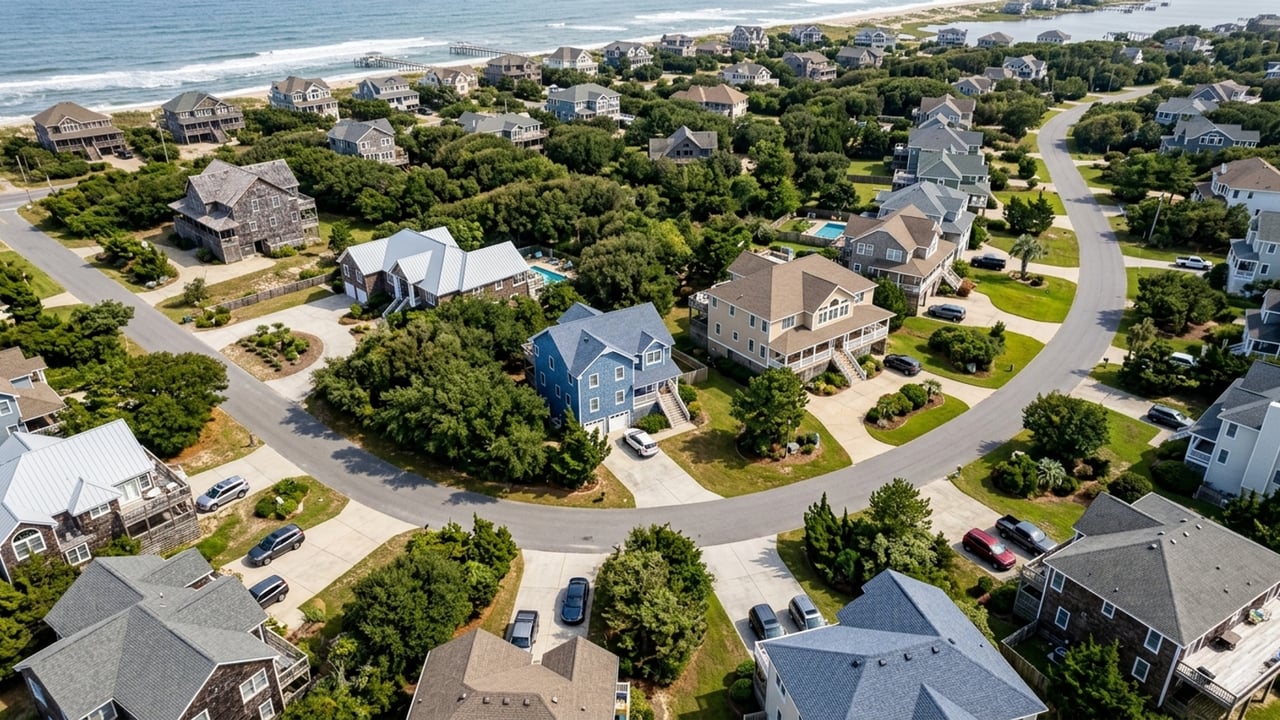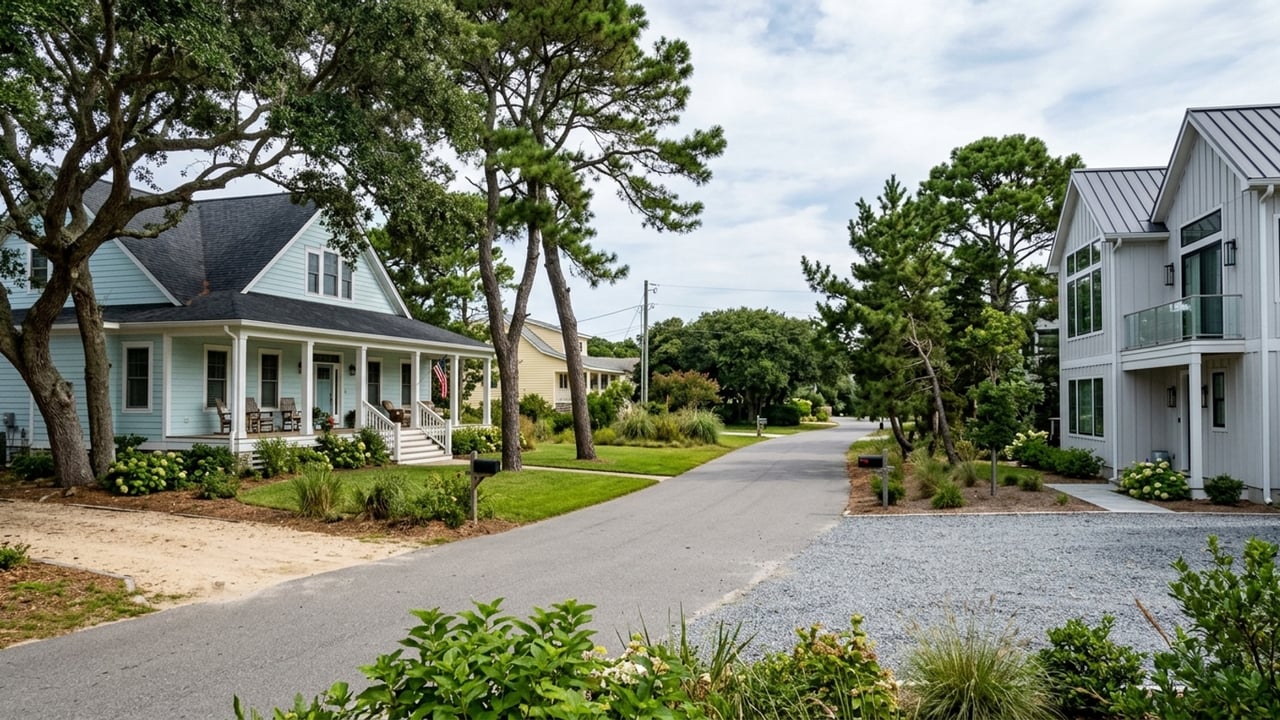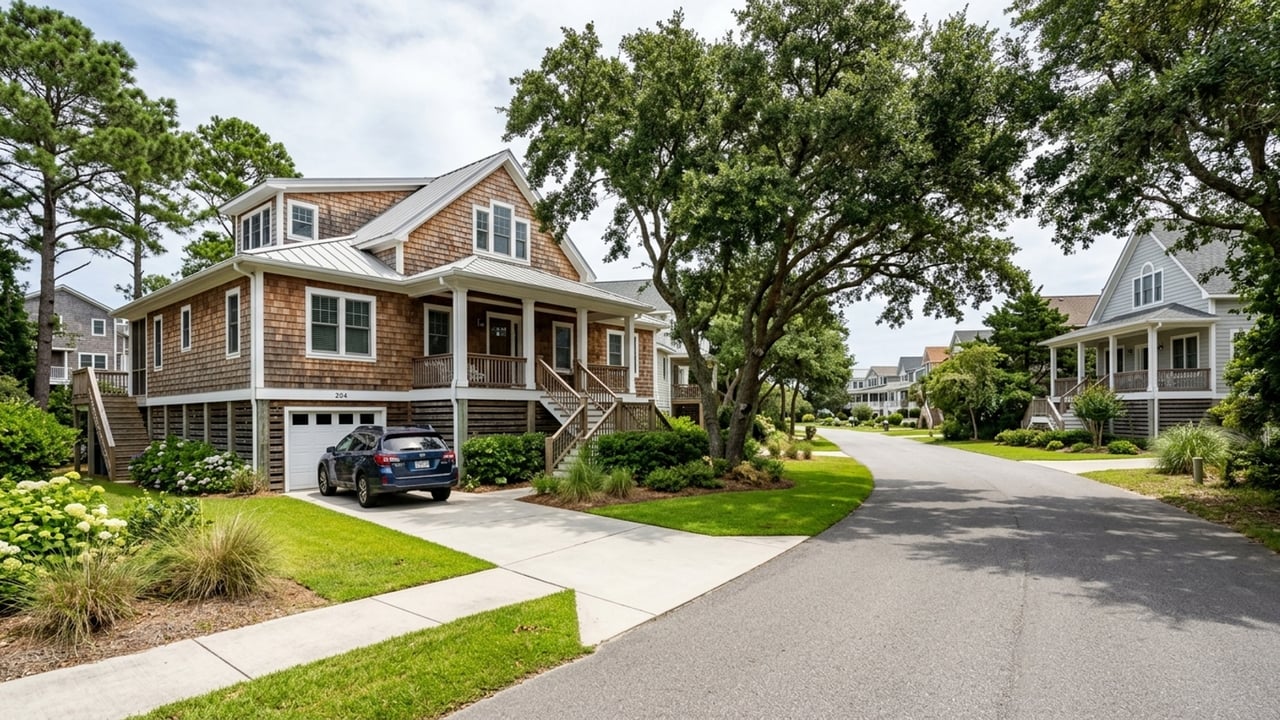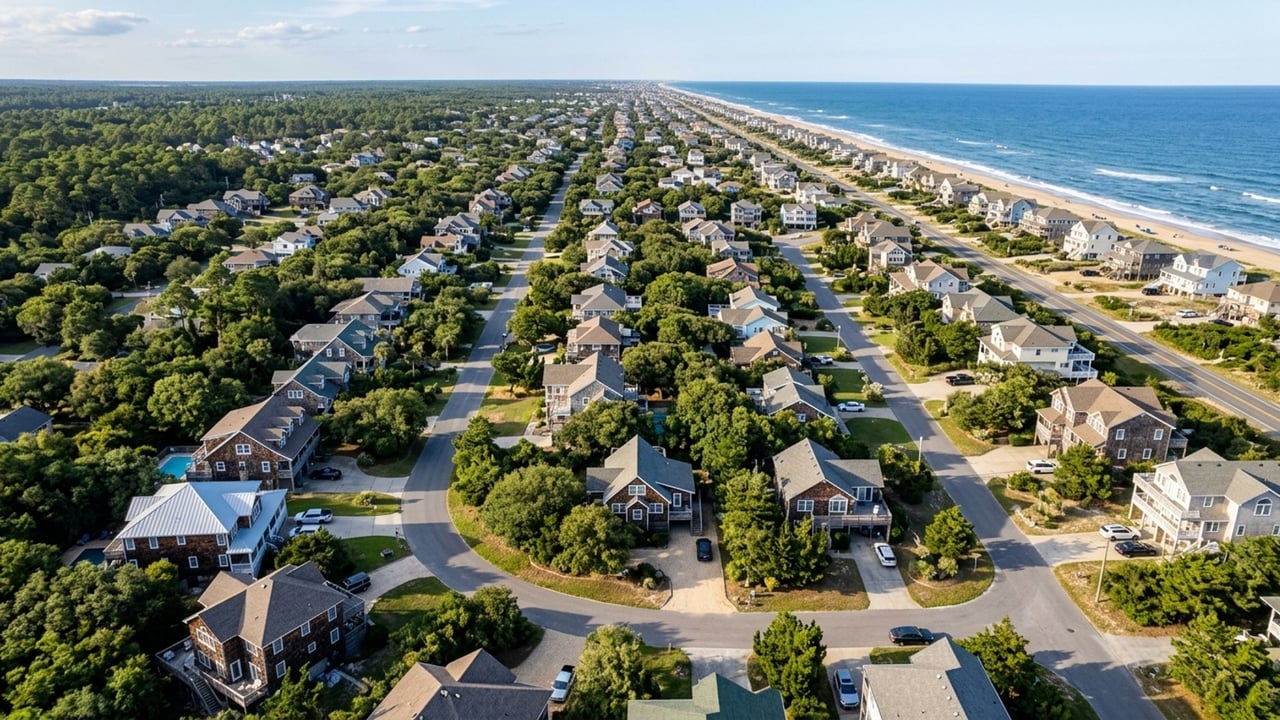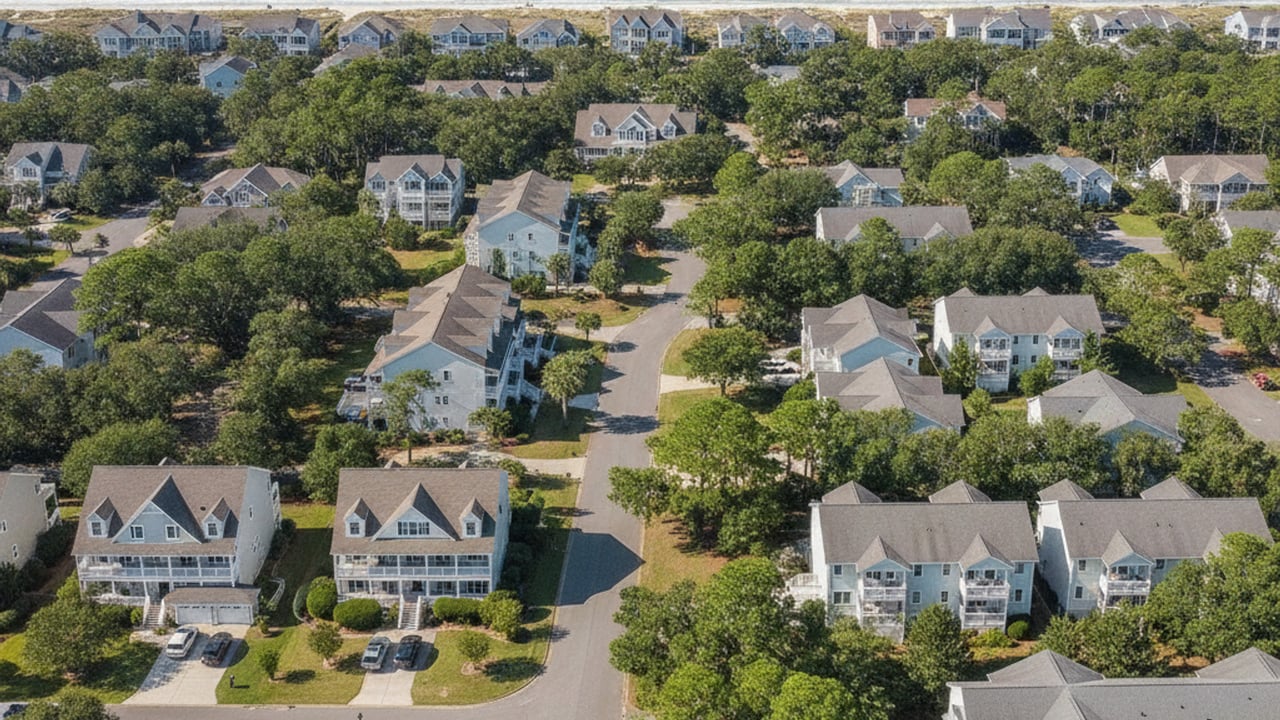
Renters in the Outer Banks housing market balance year-round living with massive seasonal tourism. Renters looking at the current landscape in 2026 will find a market where long-term housing competes directly with weekly vacationers. If you decide to buy instead, working with the best real estate agent in Kitty Hawk, NC can help you find the right property.
Local home purchases demand a substantial budget, as the median sale price in Kitty Hawk, NC is currently around $720,000. For many residents, renting provides a more accessible way to live near the water without committing to a mortgage. Review the distinct pricing tiers between property types and lease lengths to secure a place here.
Current Monthly Rent Averages in Kitty Hawk
The average rent in Kitty Hawk, NC, sits at approximately $2,000 per month as of mid-2026. This figure encompasses a mix of long-term apartments, townhomes, and smaller single-family houses located away from the immediate beachfront. Outer Banks rentals generally carry a premium compared to mainland North Carolina.
When compared to the broader United States, Kitty Hawk rental rates hover roughly 3% to 6% above the national average. Recent shifts in the 2026 rental market have kept prices relatively stable, though inventory for 12-month leases remains tight. Landlords typically look for proof of income that comfortably covers these monthly costs.
Pricing Differences Across Property Types
Housing styles in Kitty Hawk vary significantly, and your monthly payment will depend on the type of structure you choose. Traditional apartment complexes are relatively uncommon in this coastal market, as land use favors single-family construction. Because of this, renters often end up leasing individually owned properties rather than units in large corporate buildings.
Space, yard access, and proximity to the water dictate the final price tag for any rental. Here is an approximate breakdown of monthly costs by property type:
- Single-family houses: Larger detached homes average around $3,800 per month. These properties offer the most square footage and yard space, but they also carry the highest utility costs.
- Townhomes: Attached multi-level units average roughly $1,975 per month. Townhomes serve as a middle-tier option that balances interior space with more manageable housing expenses.
- Apartments and condos: Smaller units average about $1,000 per month. These offer the lowest entry price but are the most difficult to find due to limited inventory.
Year-Round Leases Versus Seasonal Vacation Rentals
The defining characteristic of the Kitty Hawk rental market is the split between long-term residents and summer visitors. Standard 12-month leases exist, but they make up a fraction of the overall housing supply. Many property owners prefer the higher yields generated by short-term vacationers during the summer months.
Peak demand hits the Outer Banks from June through August, completely altering the local pricing structure. During this window, rental rates shift from monthly figures to weekly premiums. A house that might rent for $3,000 a month in January can easily command that same amount for a single week in July.
Year-round leases require early planning and persistent searching. Many large, five-plus bedroom homes are built exclusively for the weekly vacation market and will never be offered for an annual lease. Renters seeking a permanent residence should start their search well before the summer tourist season begins.
Coastal Features and Town Amenities
Location within the town boundaries heavily influences specific rental rates. Properties situated closer to the Atlantic Ocean on the east side command the highest premiums. Properties located westward toward the sound typically provide slightly lower rents and a different set of recreational options.
The town maintains several public beach accesses, with the Kitty Hawk Bath House serving as a primary focal point with parking and facilities. For outdoor recreation away from the sand, the Kitty Hawk Woods Coastal Reserve offers extensive trails for hiking and kayaking. These natural features draw residents who want immediate access to outdoor activities.
Daily shopping and dining center around N Croatan Highway, also known as U.S. 158. This main bypass runs directly through town, hosting grocery stores, retail centers, and local restaurants. Renters living near this corridor benefit from shorter trips for their daily errands.
Commutes, Schools, and Healthcare Access
Commuters rely almost entirely on the main bypass or the beach road for work or daily needs. A commute to neighboring Kill Devil Hills takes about 10 minutes to cover the four-mile distance. Trips slightly farther south to Nags Head take 15 to 20 minutes, depending on summer traffic.
A trip north into Southern Shores usually takes less than 10 minutes. For local education, younger students in the area attend Kitty Hawk Elementary School. Middle and high school students travel to facilities in neighboring Outer Banks communities.
Medical care access is straightforward for residents living in town. The Outer Banks Hospital operates an Urgent Care Center directly in Kitty Hawk for immediate, non-life-threatening needs. For more intensive medical services, the main hospital facility is located roughly 15 minutes away in Nags Head.
Frequently Asked Questions
What is the average rent in Kitty Hawk, NC?
The overall $2,000 average blends a wide range of property types. Expect to pay closer to $3,800 for a detached home, as the $1,000 multi-family units rarely have vacancies.
What salary do I need to afford rent in Kitty Hawk, NC?
Most landlords look for a gross monthly income equal to three times the rent. To comfortably afford the $2,000 average rent, a household should earn roughly $72,000 per year.
How does the average rent in Kitty Hawk compare to other cities in North Carolina or the national average?
Coastal living drives local housing costs up to 6% above the national median. Renters willing to live inland or commute from mainland North Carolina communities often secure lower monthly rates.
What is the average cost of an Outer Banks (OBX) rental, including vacation rentals?
During the peak summer season, a large Outer Banks vacation house can cost anywhere from $3,000 to over $10,000 per week. These weekly rates drop substantially during the off-season months of November through March.
How hard is it to find a year-round long-term lease in Kitty Hawk compared to seasonal rentals?
The massive revenue gap between peak weekly vacation rates and standard monthly rent makes 12-month contracts exceedingly rare. Prospective long-term tenants should actively hunt for listings on the west side of town well before June.
Are utilities and beach access fees typically included in Kitty Hawk rental prices?
Long-term leases rarely include electricity or water in the base rent, though trash collection is generally covered by the town. Public beach access is free in Kitty Hawk, so there are no separate fees required to use the shoreline.
Is it cheaper to rent an apartment or a single-family beach house in Kitty Hawk?
While smaller multi-family units cost thousands less per month than detached homes, they rarely hit the market. If you want the lower price point of a condo, prepare to act immediately when a listing goes live.