Most people know the Outer Banks as a summer destination. Building a year-round life here is a different proposition entirely. Young professionals living in Kitty Hawk, NC find a coastal town with a low-to-medium-density layout and an economy largely tied to regional services and tourism - not exactly the kind of place where you stumble into a job at a tech startup, but a real community with real year-round residents who've figured out how to make it work.
The local real estate market reflects that year-round appeal. The median home sale price sits around $720,000 as of mid-2026, and rental inventory is thin enough that your housing search needs to start before almost anything else. Understanding the employment landscape and the housing picture will save you a lot of frustration once you're actually here.
Working and Living in Kitty Hawk
The largest single employer in the area is the Dare County government, which maintains a workforce of about 800 full-time and part-time employees across public works, parks and recreation, law enforcement, EMS, and library administration. It's not glamorous, but it's stable - and stable matters when the economy around you runs on a six-month tourist cycle.
Outside county administration, Dare County Schools and the State of North Carolina provide steady year-round work. State roles include positions with the Department of Environmental Quality and the NCDOT Ferry Division. The private sector is a different story. Hotels, retail stores, and restaurants account for a large share of local job postings, but many of those positions fluctuate hard with the summer season. If your income depends on tourism, you'll feel that swing.
Rent Prices and Cost of Living
Renting here comes with a premium. Recent estimates place the median monthly rent town-wide between $1,366 and $1,426, though studio apartments can list for nearly $1,975. That's before you account for transportation.
The area has no dedicated public transit system. You'll need a personal vehicle to commute and to handle everyday errands - that's just the reality of living out here, and it's worth building into your budget before you sign anything.
The Local Social Scene and US 158 Corridor
There's no concentrated, walkable downtown. Commercial activity runs along US 158, also known as North Croatan Highway, and that corridor at the town's entrance holds the highest density of independent businesses, restaurants, and bars. Most of your dining and social time will involve driving along that main route. If you're coming from a city, the adjustment is real - but people do adjust.
Neighborhoods and Subdivisions to Consider
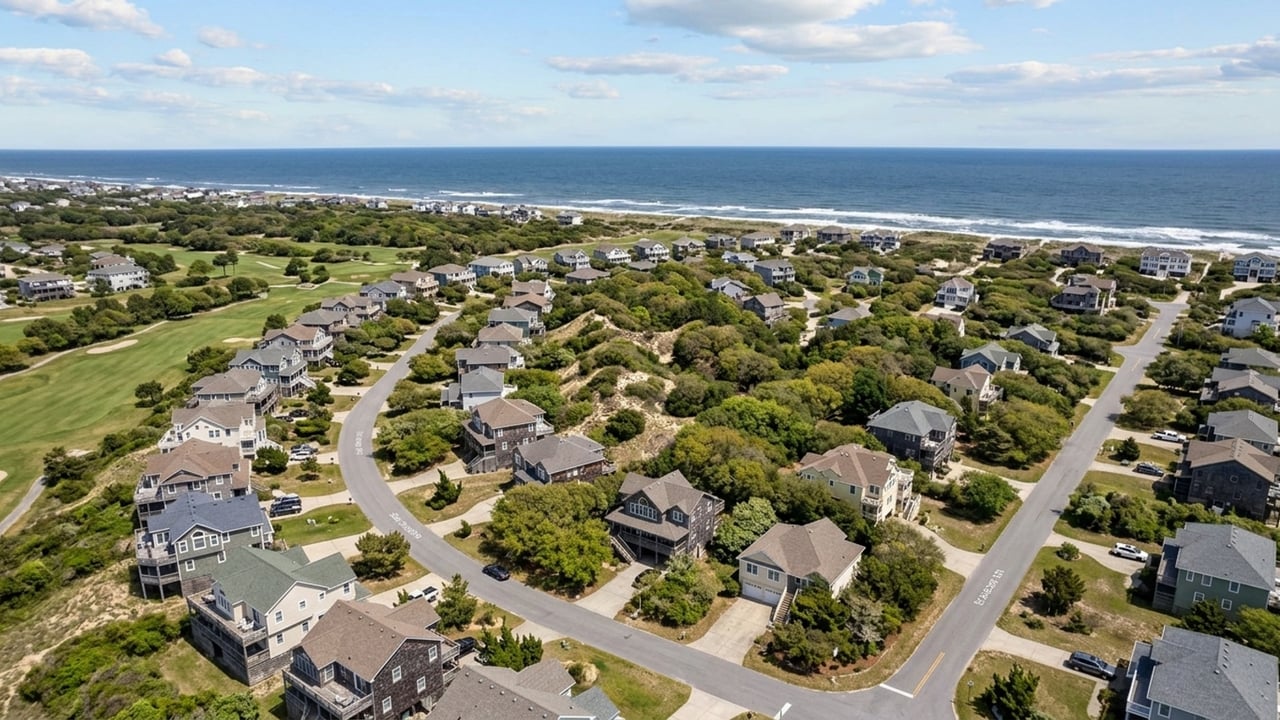
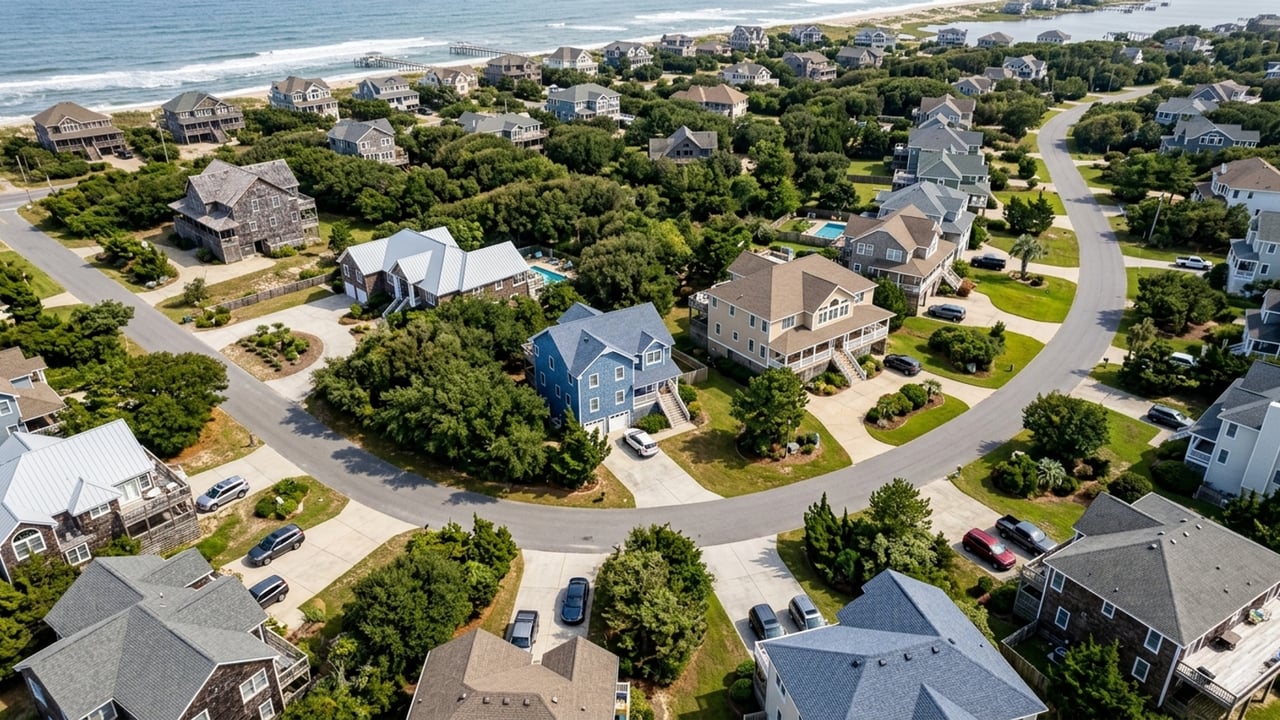
Local agents note that Kitty Hawk has roughly five distinct neighborhoods, covering everything from historic cottages to newer waterfront construction. With about 42 active listings and a median of 114 days on the market, you're not going to lose a property because you took a weekend to think it over. Homes generally sell for about 97% of their list price, and current inventory sits at about 3.2 months of supply - a reasonable window to be deliberate.
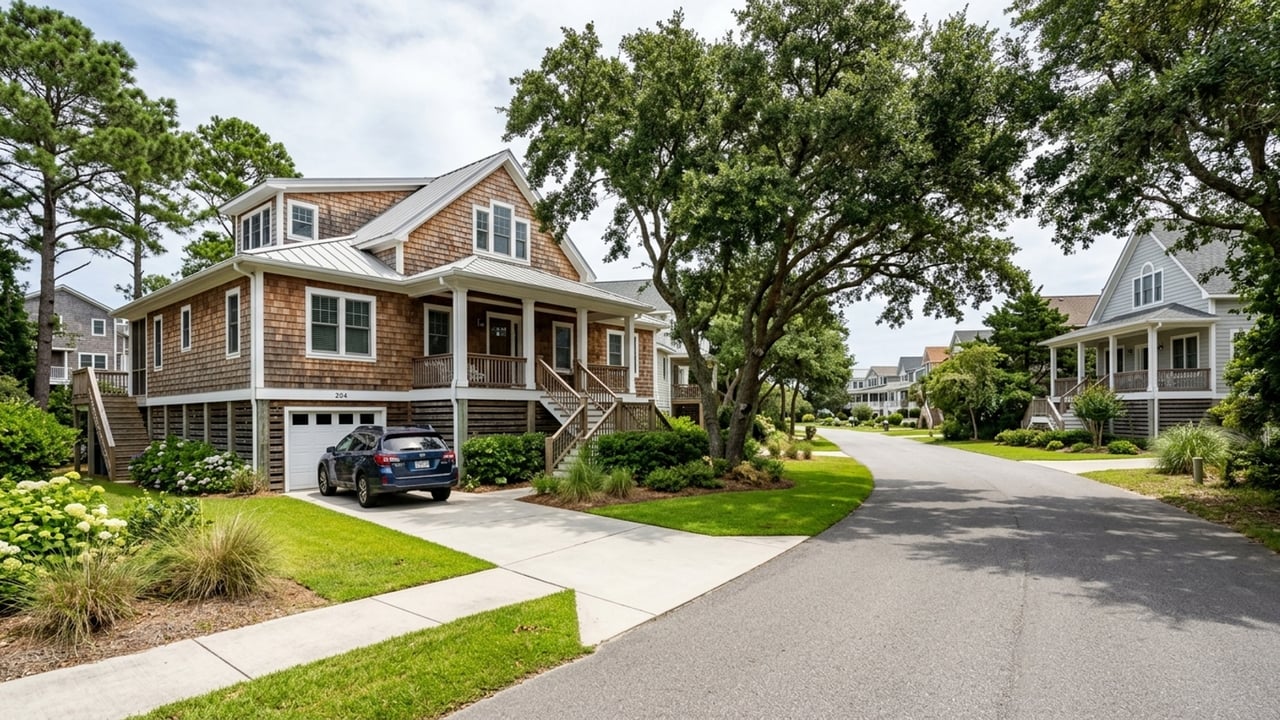
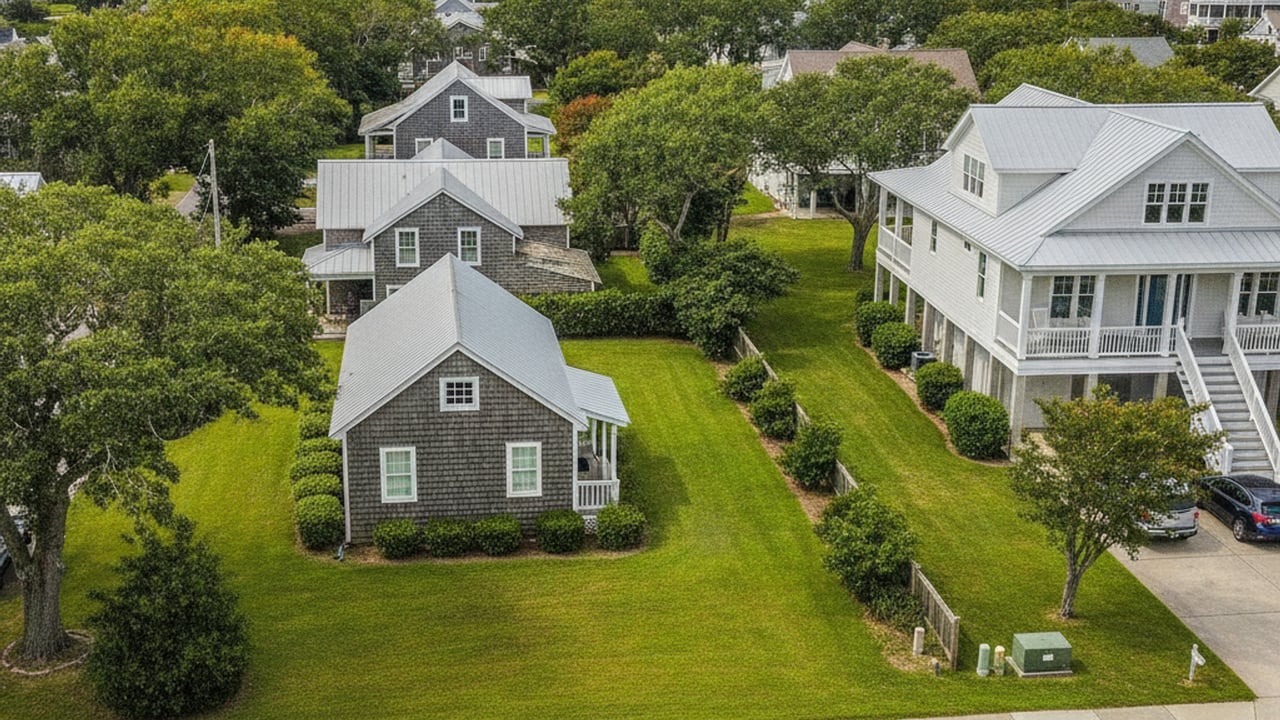
The housing stock is almost entirely single-family homes, townhouses, and smaller cottages. Traditional apartment complexes are rare to the point of being nearly irrelevant to your search.
Accessible Options in Kitty Hawk Village
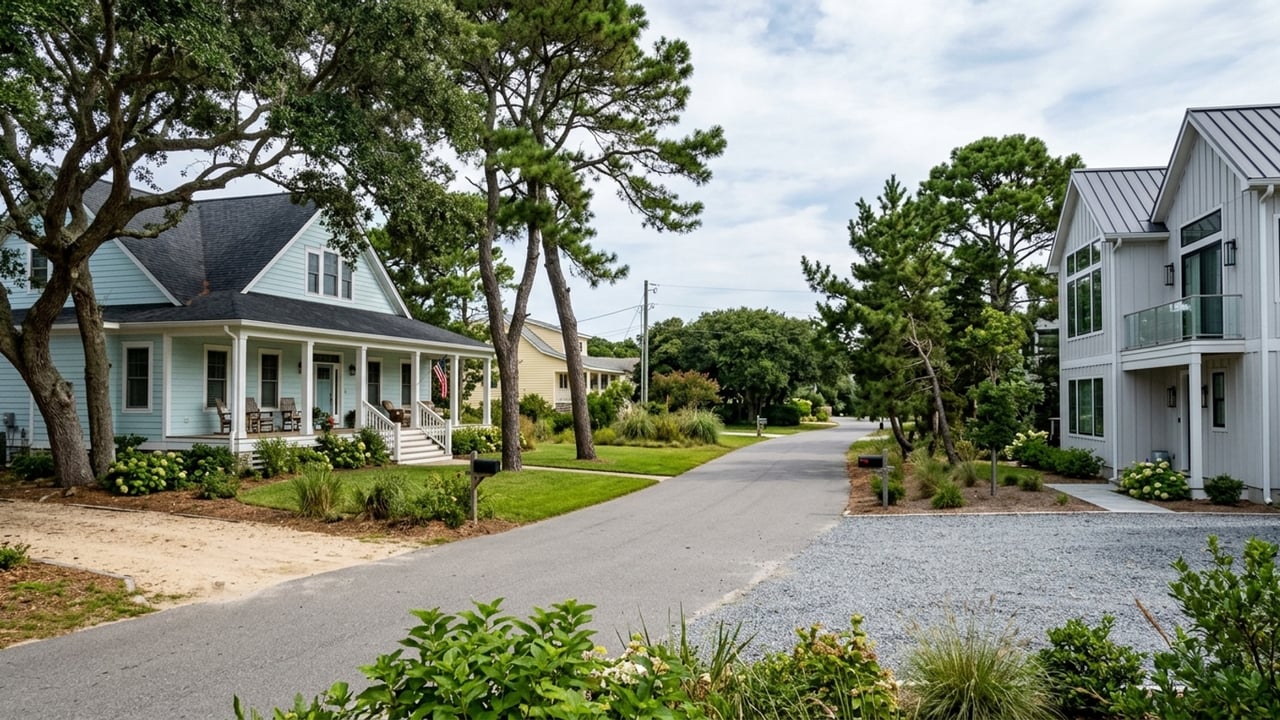
Kitty Hawk Village is the historic fishing hamlet section of town, and it's where buyers with tighter budgets tend to start. Older, smaller cottages give you a lower entry point into the market, and the setting is quieter - away from the commercial traffic on US 158, but still close to the water.
Sound-Front and Elevated Subdivisions
If water access or elevation is the priority, a few subdivisions are worth knowing by name. First Flight Ridge is a newer gated community with sound-front lots. Seascape centers around the Seascape Golf Links and offers high elevations and ocean views. Kitty Hawk Landing gives you soundfront and canal access, and Martin's Point - just outside the official town limits but within the same zip code - is a gated soundfront and creekfront setting. Each of these has a distinct character and price point, so touring them in person makes a real difference.
Finding a Year-Round Rental in a Vacation Market
This is the part of the Kitty Hawk relocation conversation that surprises most people. Long-term rental inventory in this part of the Outer Banks is genuinely scarce. Recent searches on platforms like Zillow and Apartments.com show only three to four available rentals at any given time in the 27949 zip code.
The market skews heavily toward short-term vacation rentals, which means standard apartment buildings are rare. You'll almost certainly be looking at a single-family home, duplex, or condo leased by a private owner - not a property management company with a leasing office you can walk into. Start your search months ahead of your intended move date, monitor listings daily, and connect early with property management companies that handle long-term leases.
Expected Costs for a Two-Bedroom
When two-bedroom units do come available, the prices reflect the market's scarcity. A two-bedroom, two-bathroom unit at 104 Angler Way recently listed for $2,995 per month. Another two-bedroom, two-bathroom rental at 2801 Seahorse Court listed for $2,300 per month. Neither of those is cheap, but that's what the coastal rental premium looks like in practice.
Managing Seasonal vs. Year-Round Leases
Many property owners here prefer seasonal arrangements - premium weekly rates during the summer, short-term leases over the winter. Before you sign anything, confirm in writing that the lease covers the full 12-month calendar year. Moving twice a year to accommodate tourist season is a trap that catches more than a few new residents. Clarify the lease term before you hand over a security deposit.
Building a Network in the Outer Banks
The Outer Banks Chamber of Commerce runs a Young Professionals program designed to connect early-career workers across the region. They host networking socials and business-after-hours events - recent gatherings have been held at venues like Southern Bank in Kitty Hawk. Because the town is small, most of these groups operate regionally, pulling in professionals from neighboring towns. That's actually an asset, not a limitation - your network ends up wider than it would be in a larger, more self-contained city.
There are currently no specific faith-based young professional groups listed in the area. Most social and professional connections happen through civic organizations or industry-specific associations.
Industry and Workforce Groups
The Outer Banks Association of Realtors maintains its own Young Professionals Network - a solid resource if you work in real estate, lending, or property management. The Outer Banks Workforce Network hosts symposiums focused on regional challenges like career planning, childcare, and housing, and was formed specifically to create a space for people working in the Outer Banks to meet and collaborate. If you're early in your career and trying to build relationships quickly, both are worth your time.
Practical Steps for Your Outer Banks Relocation
With roughly 13 homes sold in a given month, the market moves at a moderate pace, and that 114-day median time on market means you're not shopping in a frenzy. You have room to be thoughtful.
That said, housing comes first. Whether you're buying or signing a 12-month lease, get that locked in before you plan anything else - the scarcity of rentals will drive your timeline more than any other factor. Transportation is the second piece. The area has no public transit, and a reliable vehicle isn't optional. Your commute along US 158 and your access to work and social events both depend on it.
Setting a Housing Budget
With the median home price around $720,000, mortgage pre-approval should happen before you start touring properties. Factor in coastal-specific costs - flood insurance and wind mitigation policies add to your carrying costs in ways that buyers from inland markets sometimes miss until closing.
Renters should be prepared for monthly payments between $1,366 and $3,000 depending on unit size and proximity to the water. Having your deposit and first month's rent ready to go will put you in a stronger position when a year-round unit does surface. They don't stay available long.
Common Questions About Moving to Kitty Hawk
What is the average cost of a starter home for young professionals in Kitty Hawk, NC?
The median home sale price in Kitty Hawk is currently around $720,000. Buyers looking for a lower entry point often start in Kitty Hawk Village, where older, smaller cottages offer more accessible pricing.
Are there good local job opportunities in Kitty Hawk outside of the seasonal tourism industry?
Yes - primarily in the public sector. The Dare County government employs about 800 people, and year-round roles also exist within Dare County Schools and the State of North Carolina.
Is the high-speed internet infrastructure in Kitty Hawk reliable enough for full-time remote workers?
Remote workers do live in the area, but specific reliability metrics vary by subdivision. You'll want to verify the connection at your actual address before committing to a lease or purchase.
Does Kitty Hawk have an active year-round community and social scene for young adults?
It does, though it's regionally focused rather than concentrated in one spot. The Outer Banks Chamber of Commerce and the Outer Banks Workforce Network both host regular networking socials and business-after-hours events for young professionals across the region.
How does buying a home in Kitty Hawk compare to Kill Devil Hills for a young professional?
Kitty Hawk offers a low-to-medium-density layout with about five distinct neighborhoods, including sound-front options like First Flight Ridge. The honest answer is that you should compare current inventory and median prices in both towns directly - that's where the real difference will show up for your specific budget.
What are the biggest challenges of living in Kitty Hawk year-round during the winter off-season?
Securing a 12-month lease is the biggest hurdle. Many property owners prefer to rent at premium weekly rates during the summer and aren't interested in locking into annual agreements. Year-round rental inventory is very limited, and that's not a situation that changes much from year to year.