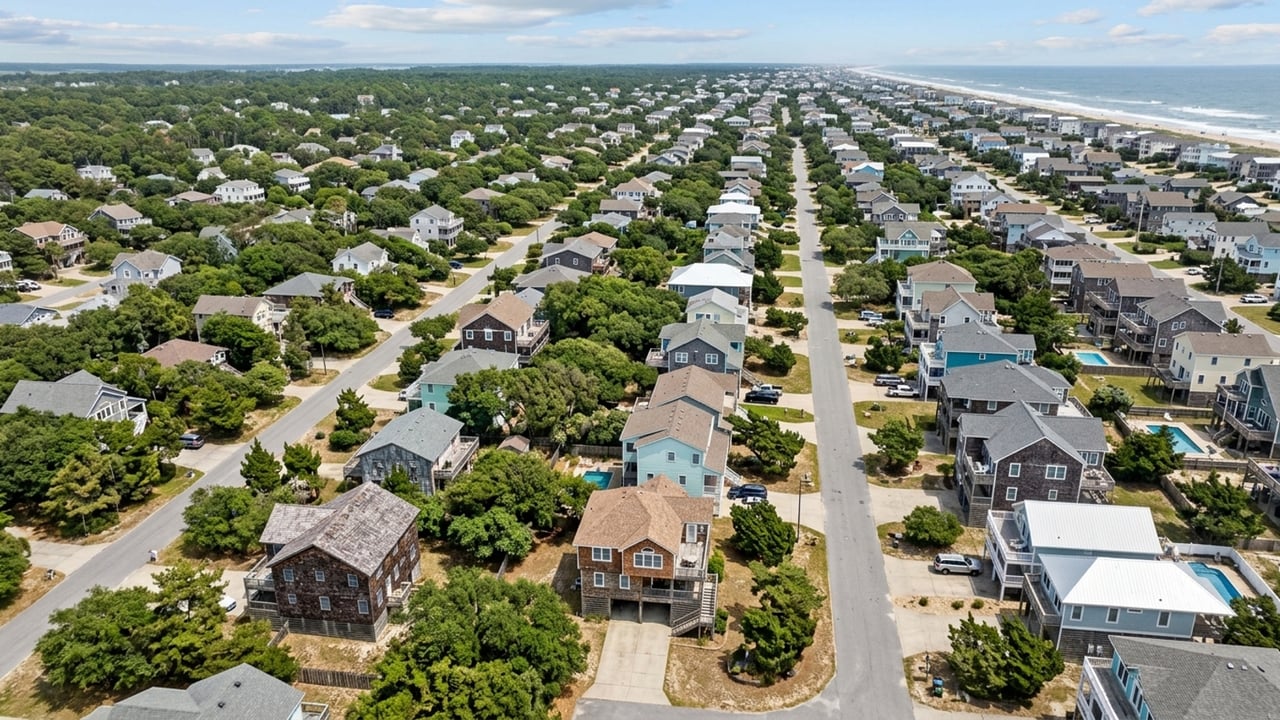
Buyers looking at the Outer Banks almost always end up with the same shortlist: Kitty Hawk or Kill Devil Hills. If you are considering living in Kitty Hawk or Kill Devil Hills, understanding their differences is essential. Both towns sit in Dare County, both give you direct access to the Atlantic, and both draw buyers chasing primary residences and vacation investments in roughly equal measure.
Where they diverge is in the details - housing budgets, town tax rates, and what each municipality actually allows for short-term rentals. Kitty Hawk tends to carry a slightly higher entry price. Kill Devil Hills runs a different town tax rate, which changes the math on annual holding costs. Getting those numbers straight before you make an offer is how you keep your purchase aligned with your financial goals.
Comparing Real Estate Prices and Local Market Data
As of mid-2026, the median sale price for a home in Kitty Hawk is around $720,000. Homes are sitting on the market roughly 114 days before closing, sellers are getting about 97% of list price, and active inventory holds at around 42 homes with 3.2 months of supply.
Kill Devil Hills generally gives you a lower entry point. The median sale price there sits near $594,676, though other listing trackers place median list and sale prices in the surrounding area between $599,000 and $625,000 depending on property type and how close you are to the water. Either way, you're looking at a meaningful gap between the two towns.
Kitty Hawk Pricing Specifics
The specific number you'll see depends on who's tracking it. Zillow's Home Value Index puts the typical home value closer to $607,036, while listing-based trackers show median prices hovering around $650,000. In practice, plan to shop somewhere in the $600,000 to $730,000 range for a standard property here.
Kill Devil Hills Pricing Specifics
That sub-$600,000 median sale price makes Kill Devil Hills an active market for buyers who want more square footage for their dollar. That said, prices scale up quickly once you cross east of the Beach Road - ocean views and direct beach access carry a real premium, and the gap between "near the beach" and "on the beach" shows up immediately in the asking price.
Property Types and Outer Banks Architecture
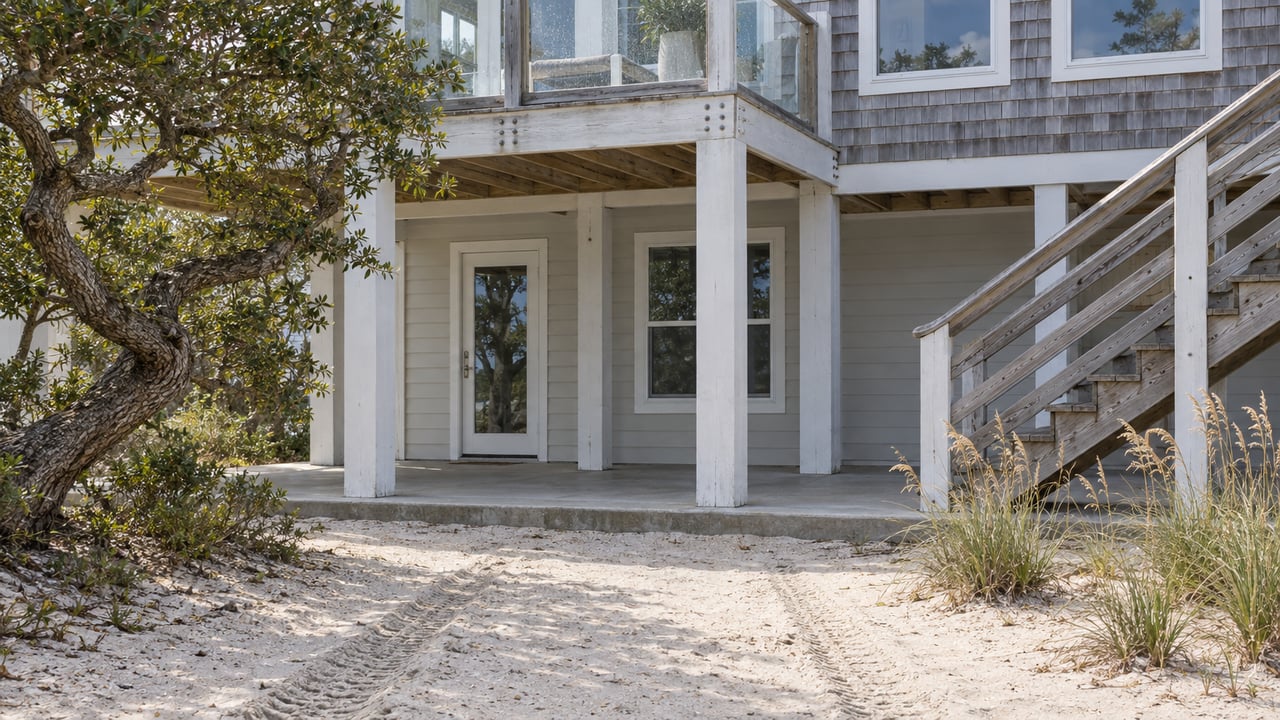
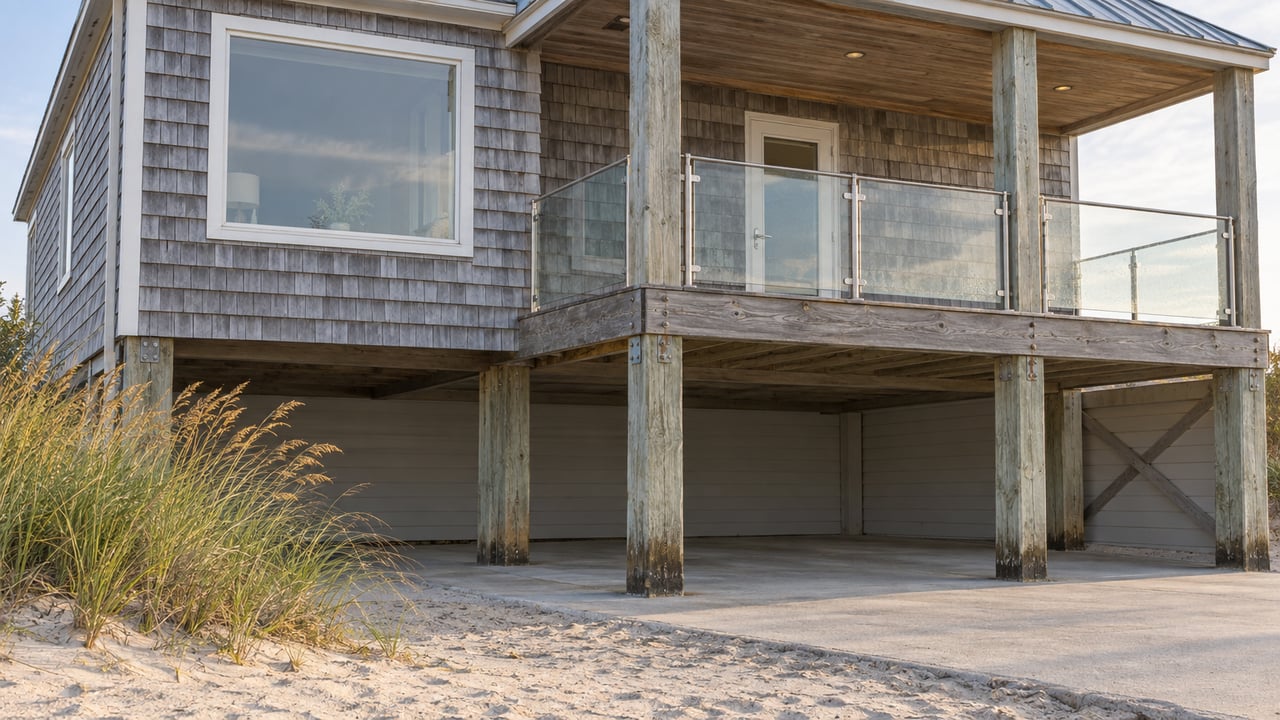
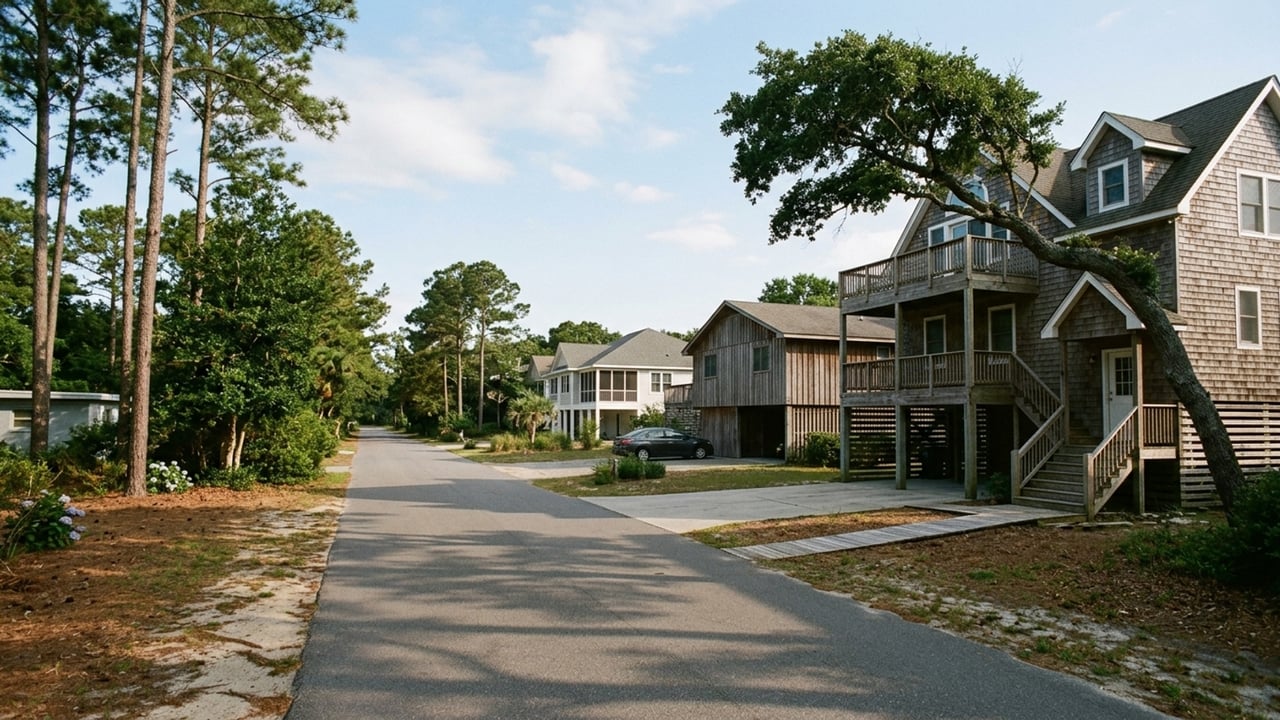
Classic coastal construction dominates both towns: traditional piling homes built to handle coastal weather and shifting sands, alongside older beach cottages, modern new builds, and multi-level investment properties sized for rental groups. How large you can build on any given lot is a function of zoning rules and distance from the ocean, so that's worth pulling before you fall in love with a parcel.
The inventory covers a wide range of uses. Year-round primary residences sit alongside seasonal second homes and full-time rental machines. Oceanfront homes require more frequent exterior upkeep - salt air and wind do real work on a building - so factor that into any budget conversation.
Waterfront and Beach Properties
Oceanfront and soundfront homes sit at the top of the price range in both towns. You'll typically find expansive decks, multiple primary suites, and direct water access - configurations built specifically to maximize rental appeal.
Condos, Townhomes, and Single-Family Homes
Pull back from the shoreline and the inventory shifts to single-family homes on traditional lots tucked into maritime forests and quieter residential streets. Condominiums and townhomes offer an alternative if you'd rather have an HOA handle exterior maintenance rather than deal with it yourself.
Vacation Rentals and Investment Potential
Property taxes are a line item that investors underestimate until they're staring at an actual bill. During the 2025 Dare County revenue-neutral revaluation, the county base tax rate was set to drop to 26.32 cents per $100 of assessed value. Each town then layers its own rate on top of that.
Kitty Hawk's town tax rate was set at 26.50 cents per $100, not including beach nourishment fees. Kill Devil Hills set its town tax rate at 35.5 cents per $100. The combined rate runs higher in Kill Devil Hills - but Kitty Hawk's higher average home values mean median tax bills there can still come out larger in absolute terms. Both facts matter depending on which property you're underwriting.
Short-Term Rental Regulations in Kitty Hawk
Kitty Hawk permits short-term rentals and currently supports over 2,400 active listings. Depending on your specific property, you may need a local business license, a rental permit, or direct registration with the town. Zoning permits could be required as well, and those sometimes come with annual renewals.
One thing worth knowing: North Carolina's Short-Term Rental Act restricts local governments from prohibiting rentals that were legally operating before a new ordinance took effect. And regardless of town, Dare County collects a 6% occupancy tax on gross lodging receipts for all short-term stays.
Short-Term Rental Rules in Kill Devil Hills
Kill Devil Hills requires hosts to get a town vacation rental permit, register guests, provide designated guest parking, and comply with specific occupancy and noise limits. Where rentals are actually permitted is controlled by the town's zoning map.
Oceanfront areas east of Beach Road and the "between the highways" neighborhoods are considered prime, low-restriction rental zones. Properties on the West Side - west of the Beach Bypass - fall into year-round residential zones where short-term rentals face tighter regulations, though some soundfront properties there remain eligible. If you're buying on the West Side specifically for rental income, check the zoning map before you get too far down the road.
Local Amenities and Daily Living
Daily life in both towns is oriented around the Atlantic to the east and the Albemarle Sound to the west. How a specific property lines up with public beach accesses, multi-use paths, and Route 158 will shape how livable it actually feels during the summer months when traffic on the Outer Banks is a real variable.
Year-round infrastructure - grocery stores, medical facilities, hardware stores - holds up consistently in both towns regardless of how the tourist population swings. That's worth something if you're planning to live here full-time.
Beach Access and Recreation
Proximity to a public beach access has a direct effect on both property values and your day-to-day routine. A house within walking distance means no parking competition for swimming, fishing, or getting in the water.
Dining, Shopping, and Businesses
Both towns have restaurants, retail, and essential services running along the main thoroughfares. Some neighborhoods also include HOA amenities - private pools, tennis courts, dedicated parking - that can add real value to a property beyond just the lot and the structure.
Frequently Asked Questions
Are home prices and property taxes higher in Kitty Hawk, NC or Kill Devil Hills?
Home prices generally run higher in Kitty Hawk, where the median sale price is around $720,000 compared to roughly $595,000 in Kill Devil Hills. Kill Devil Hills, though, carries a higher combined town and county property tax rate than Kitty Hawk.
Is Kitty Hawk or Kill Devil Hills better for year-round living versus buying a vacation investment property?
Both towns support year-round living and active vacation rental markets. Kill Devil Hills has specific year-round residential zones on its West Side with tighter short-term rental rules, which makes that area a common landing spot for primary residents.
How do flood zones and hazard insurance costs compare between Kitty Hawk and Kill Devil Hills?
Both towns are in coastal Dare County, where your proximity to the ocean and the sound drives insurance requirements. Flood zone designations and what you'll actually pay for insurance vary by the specific lot, not by town - so check the elevation certificate on any property you're seriously considering.
Which town generates higher short-term rental income during the Outer Banks summer season?
Rental income comes down to the specific property - its size, amenities, and how close it sits to the water. Oceanfront properties and homes "between the highways" in Kill Devil Hills are prime rental zones, and Kitty Hawk supports an active market of over 2,400 active listings.
Do Kitty Hawk and Kill Devil Hills have different rules for public beach access, driving on the sand, or parking?
Both towns maintain public beach accesses. Kill Devil Hills specifically requires short-term rental hosts to provide designated guest parking. For current public parking rules and beach driving regulations, go directly to the municipal ordinances for each town - those details change.
Does buying a house in Kitty Hawk, NC make dealing with summer bridge traffic easier than in Kill Devil Hills?
Kitty Hawk sits slightly further north, which puts it closer to the Wright Memorial Bridge entry point to the Outer Banks. That said, summer traffic affects both towns, and how your daily drive actually feels depends on where your specific home sits relative to the main bypass.