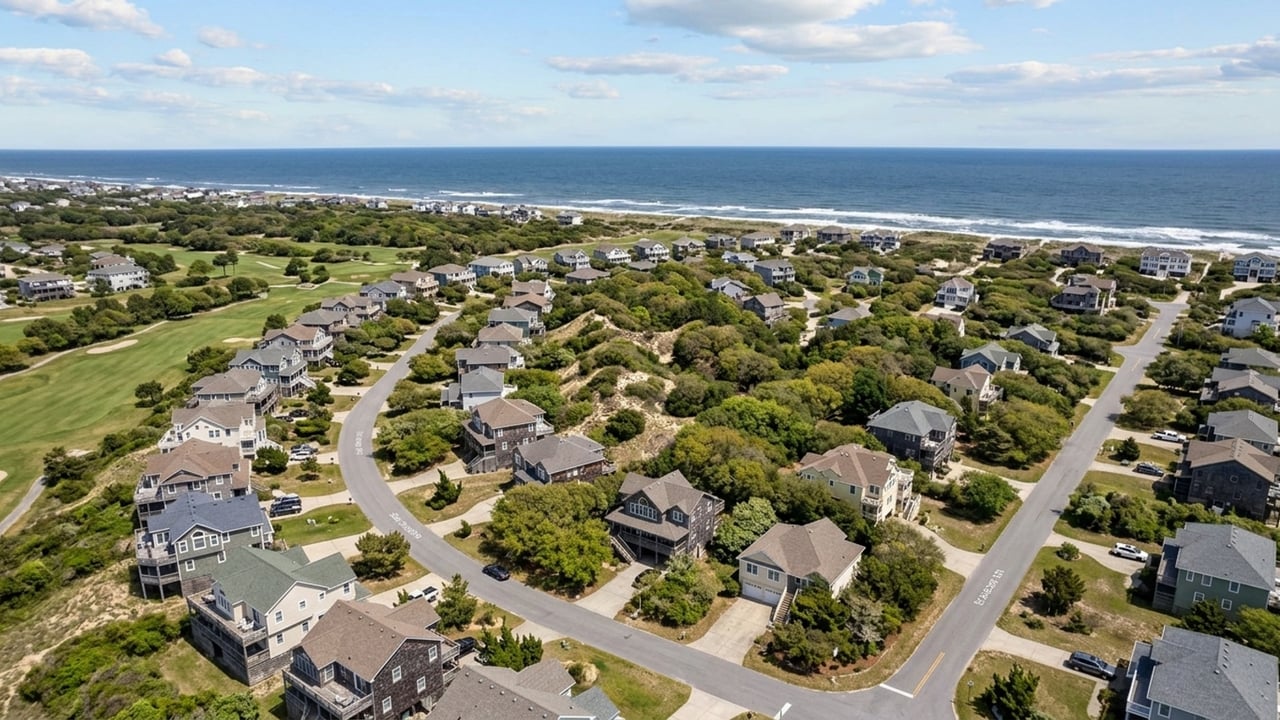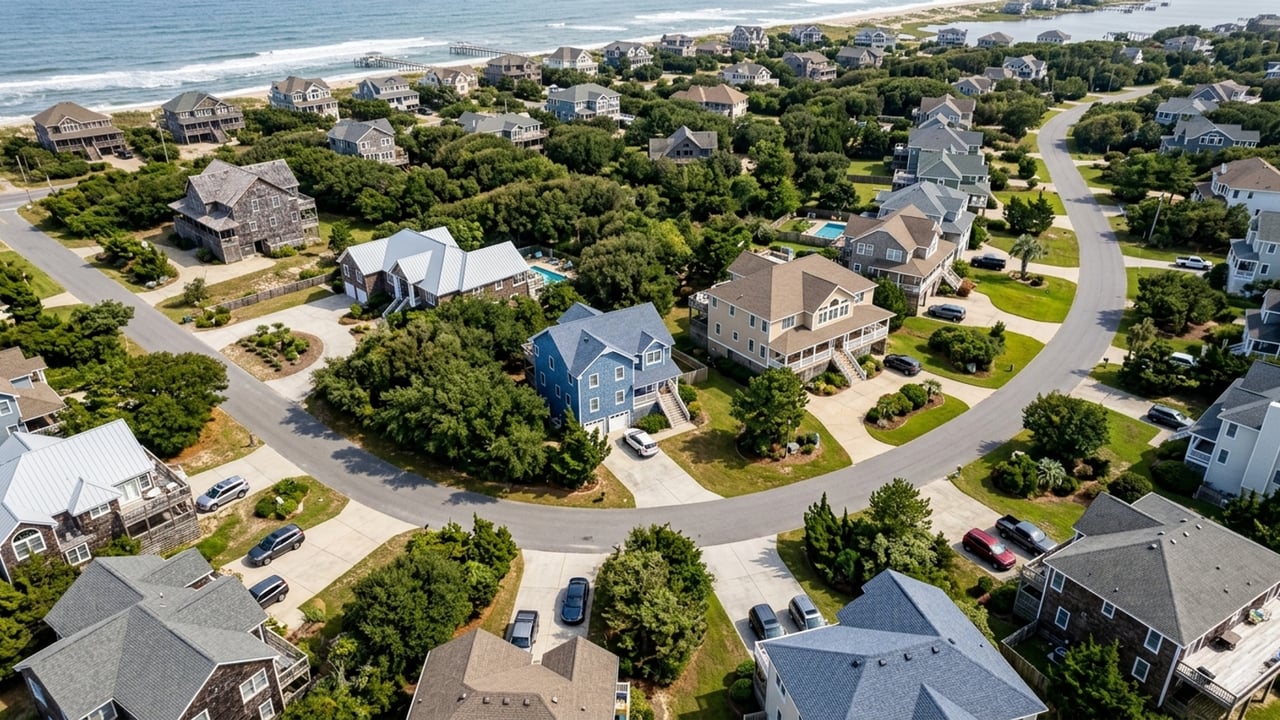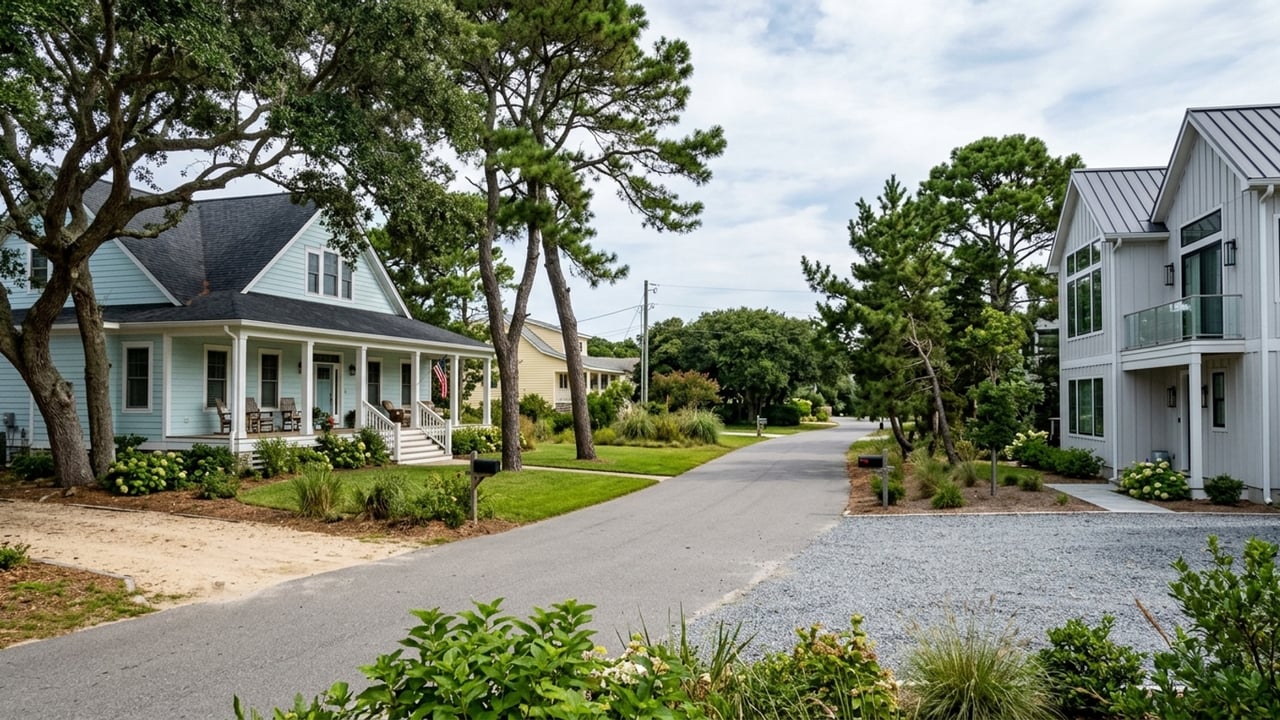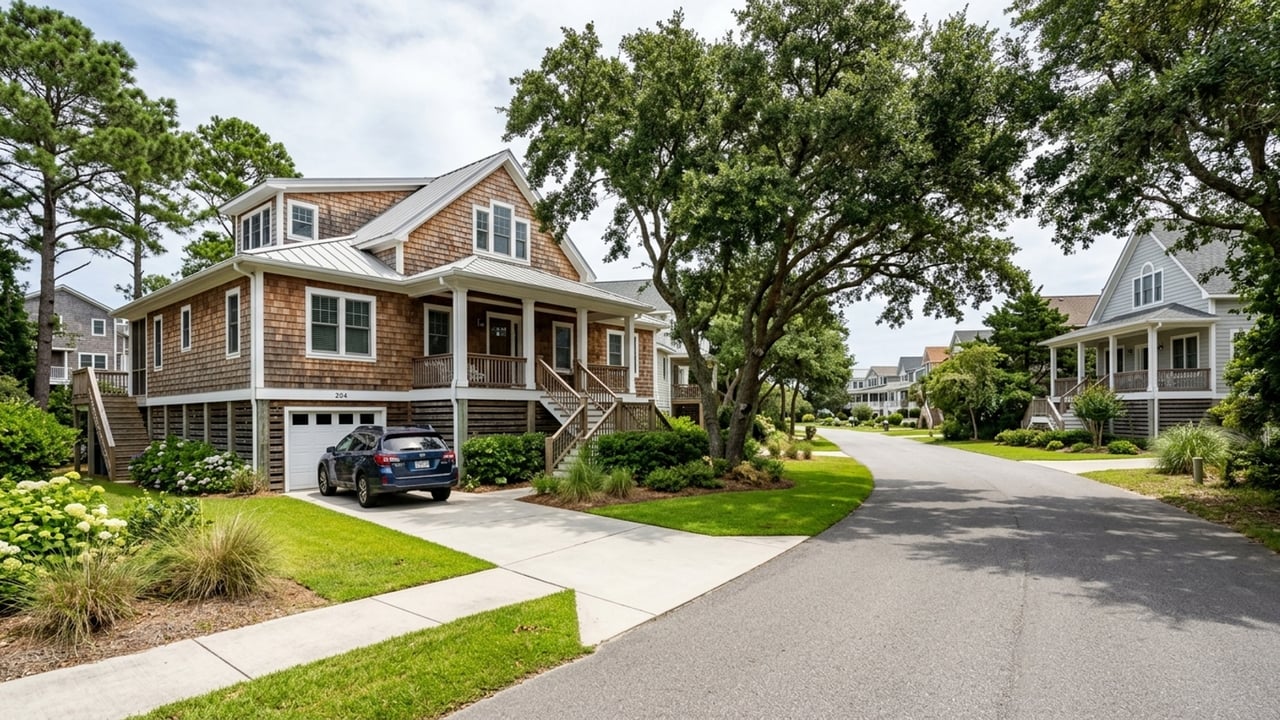
If you are considering living in Kitty Hawk, NC, you will find a year-round population of approximately 3,724 residents - a community small enough that people know their neighbors, but large enough to support a real local economy. Between 2019 and 2024, the town grew 6.7%, which works out to about 1.3% annually. For 2026, projections put the population somewhere between 3,667 and 3,824 residents.
The coastal location shows up immediately in the numbers. The median home sale price sits around $720,000 as of mid-2026, homes are averaging 114 days on market, and there are roughly 42 active listings to choose from. Before you commit to a purchase at that price point, it's worth understanding exactly what the local job market looks like - because the income picture here is more nuanced than the headline figures suggest.
Kitty Hawk Employment Overview for 2026
Dare County doesn't run on the same economic clock as an inland metro. Seasonal tourism shapes everything - hiring timelines, income stability, even how lenders look at your application. The county's unemployment rate came in at 4.1% per the March 2026 release of the NC Department of Commerce's Economic Vitality Index, tracking close to the national rate of 4.0% for the same period.
Year-round residents who weather the off-season successfully tend to land in local government, healthcare, or education. Those sectors don't slow down when the tourists leave. And the steady population growth over the past five years has kept demand for those permanent roles from softening.
Population Growth and Local Economy
That 1.3% annualized growth rate might sound modest, but it creates a consistent pull on community services. As more people make Kitty Hawk their primary address rather than a vacation property, the labor market tilts a little further toward year-round infrastructure support - public works, schools, clinics, local contractors who aren't chasing the summer rush.
Dare County Unemployment Rates
A 4.1% unemployment rate is about as stable as you'll see in a coastal county where seasonal swings are a fact of life. The baseline data suggests permanent residents can find consistent work, though the picture shifts month to month. If you're job hunting here, it's worth watching how the county figures track against broader state trends through the year - the gap can be telling.
State-Level Hiring Trends in North Carolina
North Carolina's seasonally adjusted unemployment rate dropped to 3.6% in June 2026 - down 0.1 percentage points from May and 0.2 points below where it was a year earlier. Over the past twelve months, the state added 62,900 total nonfarm jobs.
There's a wrinkle worth paying attention to, though. The labor force shrank by 17,300 participants in June 2026. Jobs are out there, but fewer people are actively looking. Some analysts read that as a broader softening in labor market participation rather than a sign of economic strength.
Statewide Job Additions
The sector driving the most growth is Private Education and Health Services, which added 21,800 jobs over the year. Leisure and Hospitality came in second with 15,600 new roles, and Construction added 15,500 positions. Those three sectors account for the bulk of what North Carolina has built over the past twelve months.
Labor Force Shifts
Fewer active participants in the labor pool can actually work in a job seeker's favor for specialized roles - less competition for positions that require credentials or experience. The practical takeaway: focus on industries showing consistent year-over-year growth rather than sectors that are hiring opportunistically.
High-Demand Industries in the Outer Banks
The NC Department of Commerce projects Health Care and Social Assistance as the fastest-growing sector statewide - 1.12% annual growth, with approximately 79,000 new jobs expected by 2034. Professional, Scientific, and Technical Services ranks second, at a projected 0.96% annual growth rate and 33,500 new jobs.
Locally, Dare County operates on its own subset of that picture. Accommodation and Food Services remain dominant forces here, and Real Estate ranks among the top five fastest-growing sectors for these coastal sub-regions, driven by continuous property turnover and the vacation rental market.
Healthcare and Technical Roles
Healthcare is one of the few sectors in a beach town that staffs the same way in January as it does in July. Medical professionals and social assistance workers will find steady demand as the local population ages and grows, and technical and scientific roles offer genuine footholds for people with specialized degrees who want to live on the coast without piecing together seasonal work.
Tourism and Real Estate
The Outer Banks economy is built on visitors - that's just the reality. Food service, lodging, and property management are major employment engines, and real estate professionals here handle everything from homes averaging $720,000 to the short-term rental inventory that drives a significant portion of local income. Peak summer months bring the most opportunity, but the work is genuinely there.
Major Employers in Dare County
Public sector organizations are the backbone of permanent employment in the Outer Banks. Dare County Schools posts openings regularly across the county, including positions in neighboring towns like Kill Devil Hills and Nags Head. The roles range from licensed teaching positions to administrative and facility support staff.
A job with a large public employer does something important for a buyer in this market: it provides the kind of consistent, documented year-round income that lenders actually want to see when you're financing a $720,000 home.
Public Sector and Education
The school district is one of the most visible public employers in the region, and for good reason - it hires across multiple job categories, the schedule is predictable, and the benefits are real. Openings shift with the academic calendar and district enrollment, so it's worth checking the postings regularly rather than assuming a given role will stay open.
Regional Outer Banks Opportunities
County government services need ongoing staffing to support both the year-round population and the seasonal influx. Road maintenance, public safety, and administrative offices all offer permanent roles. A lot of residents commute short distances between Outer Banks towns to access these positions - it's a normal part of life out here, not a hardship.
Income and Local Home Prices
The median household income in Kitty Hawk reached $94,450 in 2024, up 6.4% over the previous year. The average household income sits higher at $138,815 - a 16.9% year-over-year jump that reflects higher earners in healthcare, real estate, and professional services pulling that average up. The local poverty rate is 4.73%.
Homeownership sits at 72.6%, which is high. But a 72.6% ownership rate against a $720,000 median sale price tells you something: a lot of owners here either bought years ago, carry secondary income, or work remotely. That context matters when you're sizing up your own situation.
Median Salaries in the Area
The $94,450 median household income is your baseline - what a typical Kitty Hawk household brings in. High earners in healthcare, real estate, and professional services push the average household income up to nearly $139,000. Those two numbers together give you a realistic range for what professionals relocating here can expect, depending on their field.
Balancing Income with Housing Costs
A $720,000 purchase requires a substantial down payment and a debt-to-income ratio that a lender will actually approve. If you're planning to rely entirely on local employment income, you need to be honest with yourself about whether the salary you can realistically earn here covers the monthly obligation. Buyers with remote roles or secondary income streams tend to have a much easier time at the underwriting table.
Government Roles and Remote Work
State and county governments post job announcements for roles based in coastal communities with reasonable regularity. Dare County offers administrative and public works positions that serve the local population directly.
The State of North Carolina also provides remote work opportunities, which is genuinely useful for Kitty Hawk residents - you can earn a state-level salary without commuting to Raleigh. These remote roles span multiple departments and frequently don't require a specific degree.
Municipal and County Positions
Working directly for Dare County is about as stable as local employment gets. Consistent hours, state retirement benefits, and work that doesn't evaporate in November. The county's official employment portal is where you'll find current openings - worth bookmarking if you're serious about landing something permanent before you buy.
Remote State Employment
Remote state jobs let Kitty Hawk residents plug into the broader North Carolina economy without giving up the location. Customer service, data entry, and project management roles come up with work-from-home flexibility. For someone who wants to live near the beach without depending on the hospitality industry to pay the mortgage, this is worth looking at seriously.
Where to Find Job Openings
The NC Department of Commerce manages the NCWorks unemployment and job portal - that's your primary statewide resource. It aggregates state job announcements alongside private sector postings, and it's more comprehensive than most people realize.
Local job boards and regional classifieds fill in the gaps for immediate openings in part-time and full-time roles. Using both - the state portal and the local networks - is the most efficient approach for anyone job hunting on the Outer Banks.
Local Job Boards
Regional employment sites regularly list positions in property management, food service, and retail. They're particularly useful for finding part-time work during the busy summer season. Most let you filter by town, so you can look specifically at what's available in Kitty Hawk rather than scrolling through listings from the mainland.
State Workforce Portals
The NCWorks portal connects applicants with employers across the state and lets you filter for remote positions if that's your priority. It also provides labor market data and resources for workforce training and resume development - useful if you're transitioning into one of the high-demand sectors rather than arriving with the exact credentials employers are looking for.
Frequently Asked Questions
Do I need to secure a job in Dare County before putting an offer on a house in Kitty Hawk?
It depends on your situation. If local income is how you're qualifying for a mortgage on a $720,000 home, lenders will require proof of employment in the area. Remote workers or buyers with sufficient independent wealth may not need a local job offer in hand.
How hard is it to get approved for a mortgage using seasonal hospitality income from the Outer Banks?
It's not easy. Lenders prefer consistent year-round earnings - the kind that come from healthcare, education, or municipal roles. To qualify with seasonal income, you'll likely need to show a multi-year history of consistent seasonal earnings.
What are the primary industries providing steady year-round employment for Kitty Hawk residents?
Public education, county government, and healthcare are the most reliable. Dare County Schools, for example, hires across various roles throughout the region. These sectors hold steady regardless of what tourism is doing.
Will the winter off-season in Kitty Hawk negatively impact my ability to find reliable local work?
Yes - accommodation and food service roles thin out significantly in the off-season. Positions in professional, scientific, and technical services or local government don't follow that same pattern, so if year-round reliability matters to you, those are the sectors to target.
Is Kitty Hawk a practical place to buy a home if I work remotely rather than relying on the local economy?
Yes. Many residents here do exactly that. The State of North Carolina offers various remote roles, and remote workers sidestep the seasonal income problem entirely. That flexibility makes the area's $720,000 median home price a more realistic target for buyers who aren't dependent on local hospitality wages.
How does the high demand for seasonal worker housing impact real estate investment opportunities in Kitty Hawk?
The continuous turnover of seasonal workers and vacationers makes real estate one of the fastest-growing sectors in coastal areas like Dare County, and investors do purchase properties to serve that transient population. That demand is part of what supports the area's 72.6% homeownership rate and sustains property values.