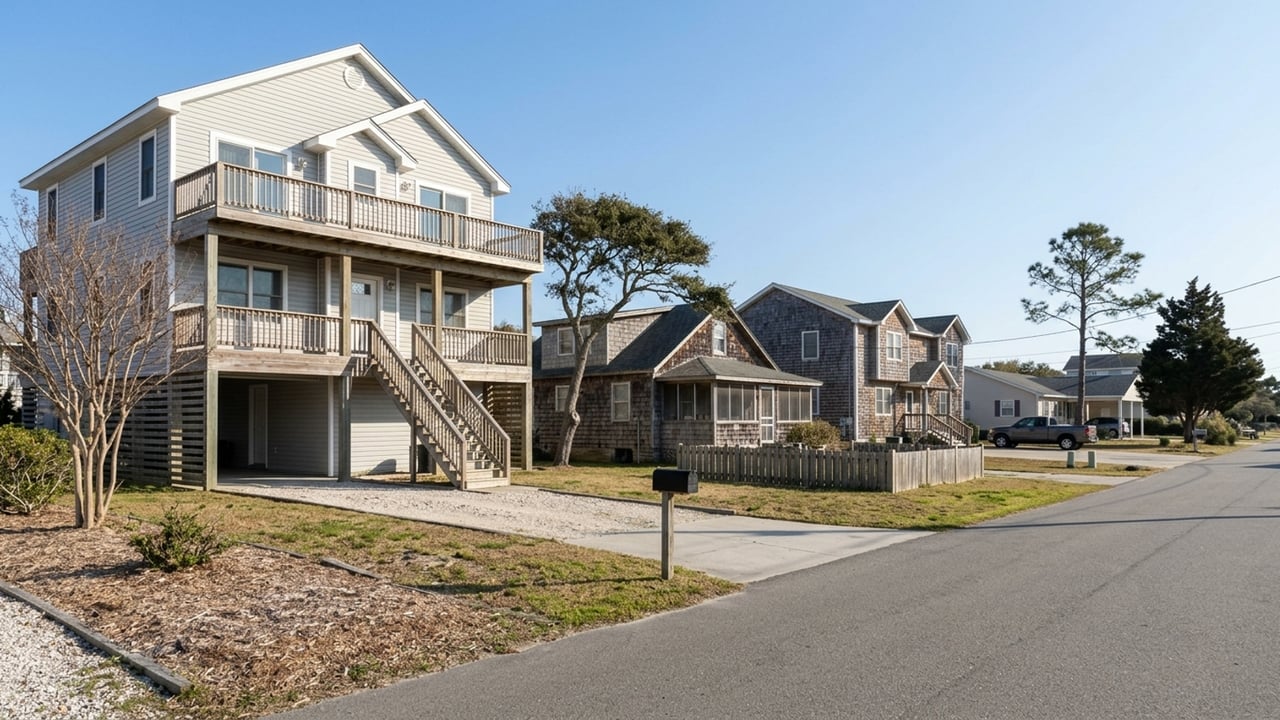
The Kill Devil Hills, NC, metro area covers all of Dare County and offers a genuinely distinct mix of coastal properties. The type you choose shapes your insurance costs and how much exterior maintenance you own. It also determines what market data you'll have to support an offer.
Key takeaway
Most homes that sell in the Kill Devil Hills area are single-family houses, and that's where you'll find both the most choice and the most room to negotiate: the median single-family price fell over the past year. Condos, townhomes, and duplexes are the alternative if you want an association to handle exterior upkeep. So few sell each month, though, that pricing one takes extra homework.
Who this guide is for
You're shopping for a home in the Kill Devil Hills area and deciding whether a single-family house or an attached home like a condo, townhome, or duplex fits your budget and plans.
What types of homes are in the Kill Devil Hills area?
A home search here means choosing between two markets:
- A deep single-family market, where houses accounted for 96 of 108 total sales over the 30 days ending September 30, 2026.
- A thin market of condos, townhomes, and duplexes.
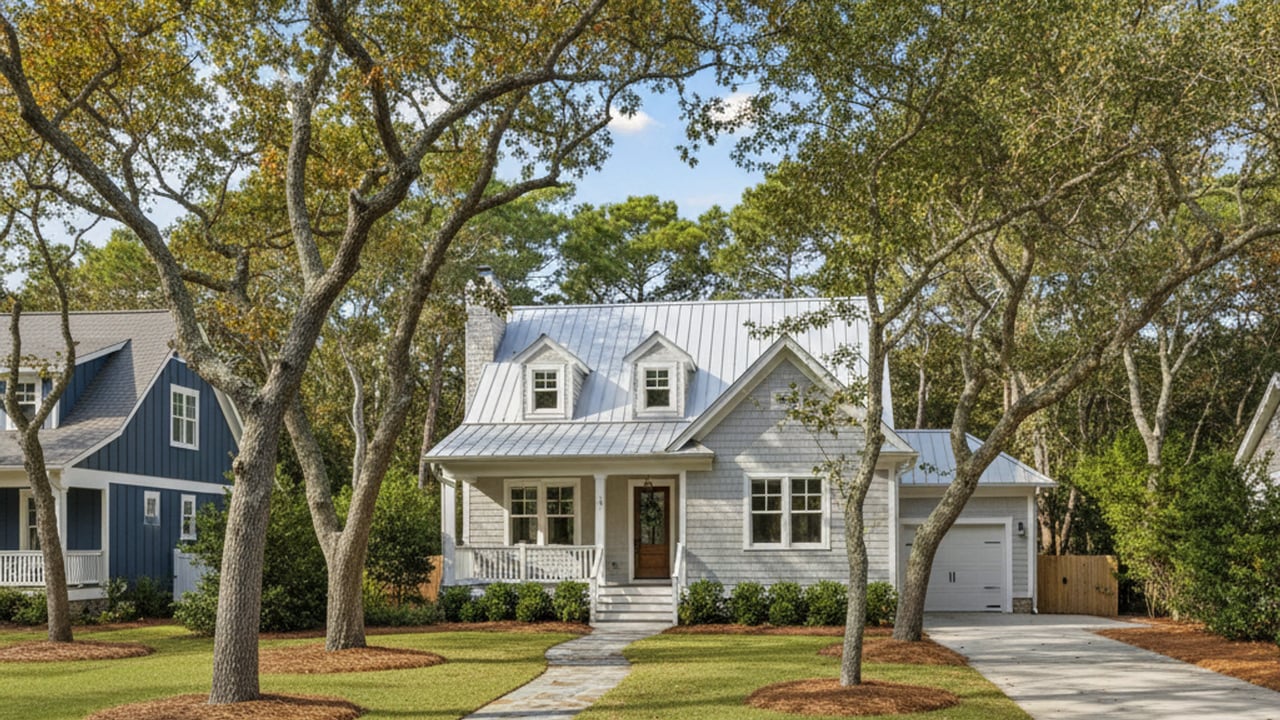
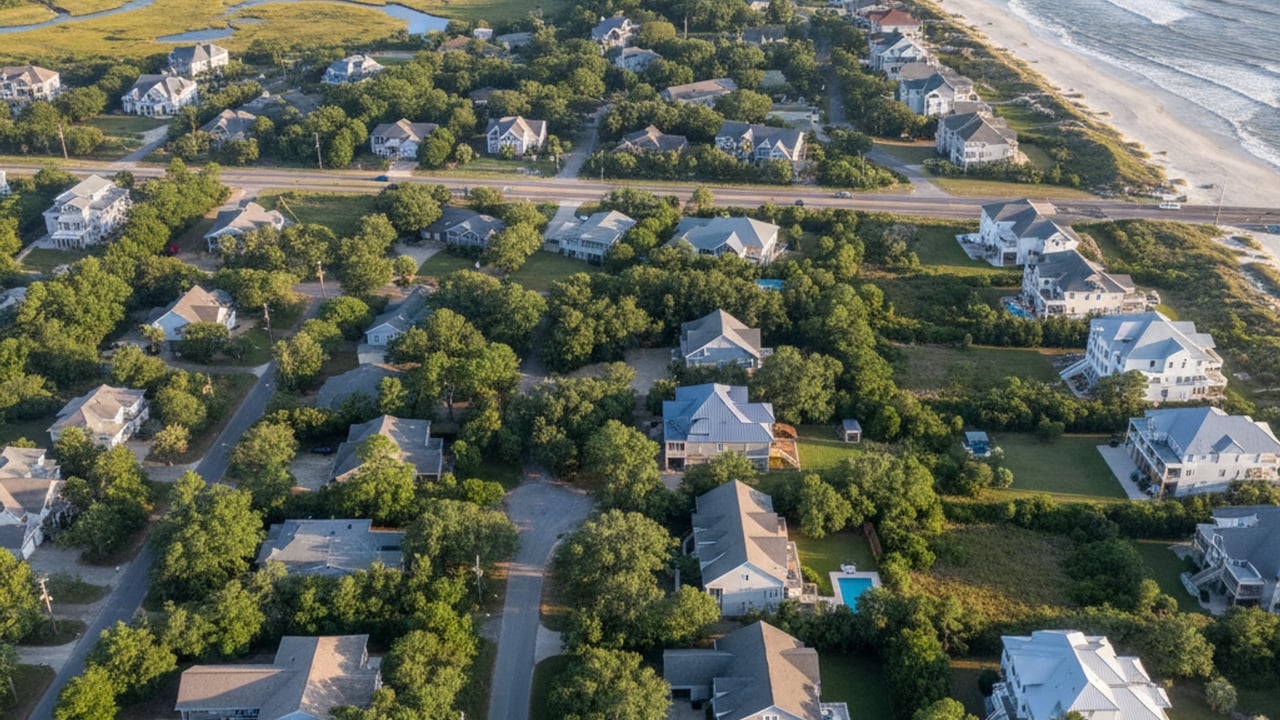
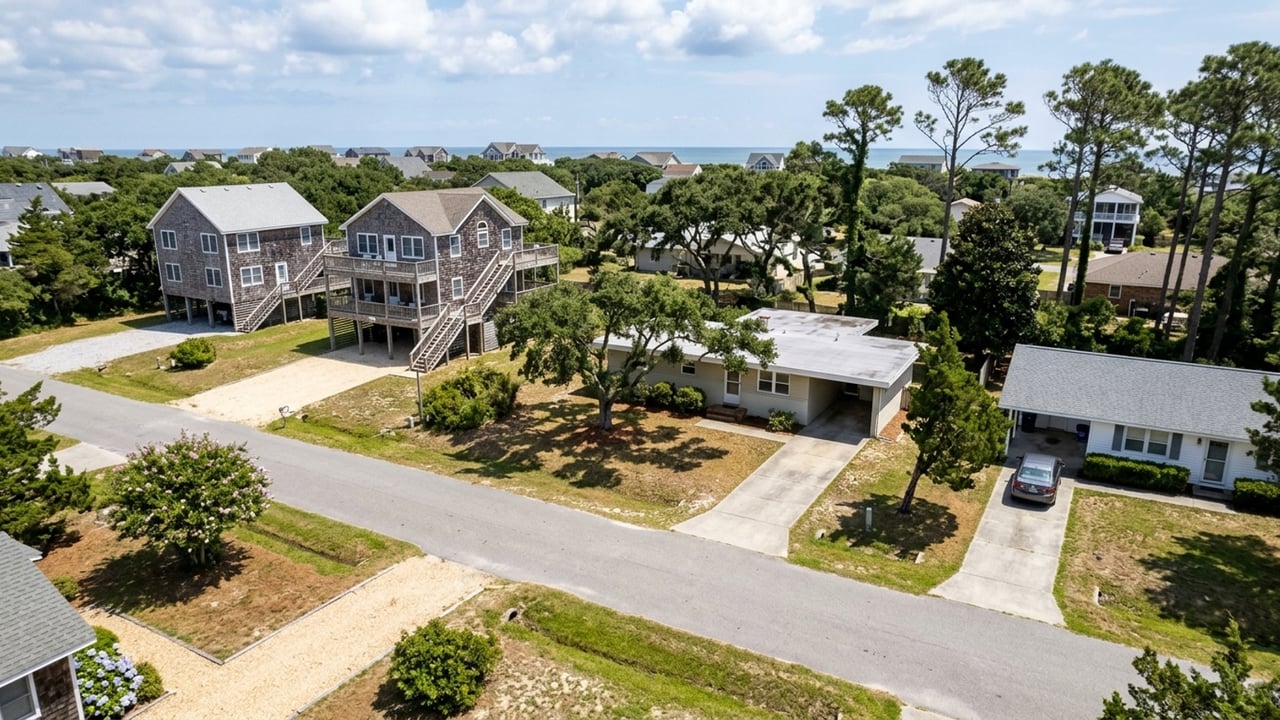
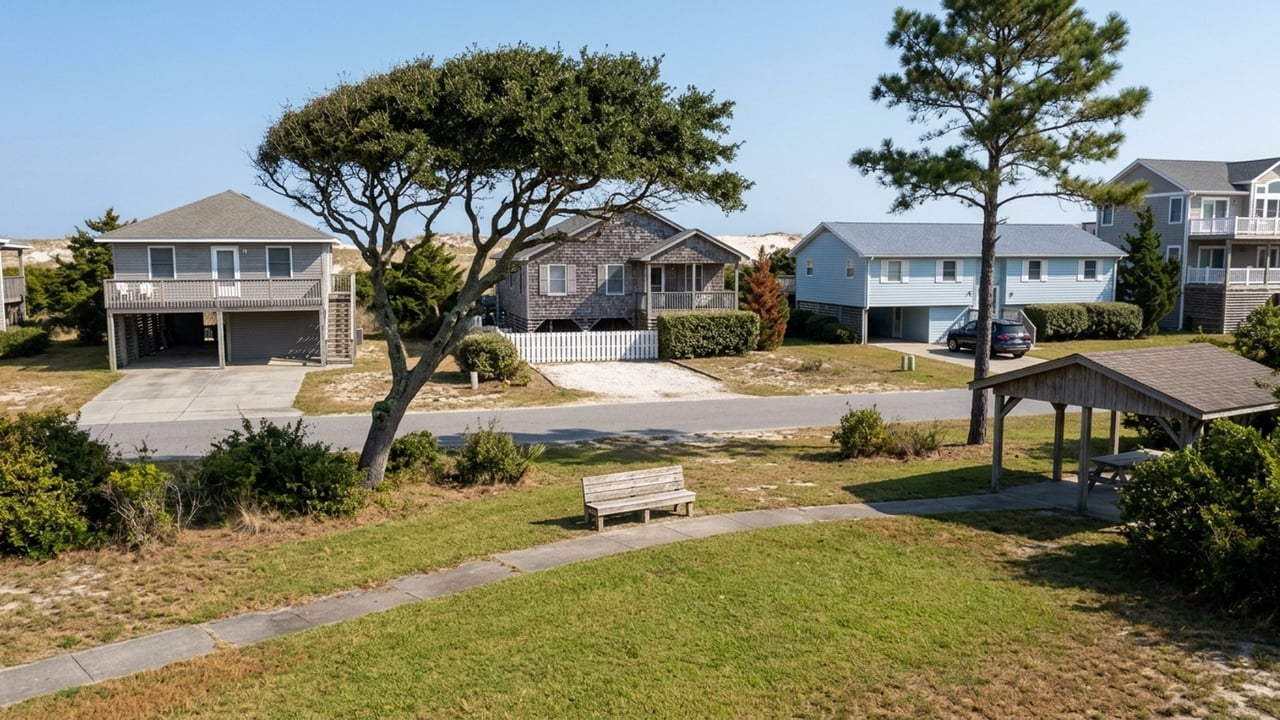
Single-family houses range from older ground-level beach cottages to raised homes on pilings and larger multi-story vacation properties. Under the Town of Kill Devil Hills Zoning Code, duplexes are permitted in multiple districts. In the Light Industrial Two Zone, they're permitted outright alongside single-family and multi-family homes.
Manufactured homes are treated separately. They're allowed in certain Light Industrial districts but explicitly prohibited from being used as accessory dwelling units anywhere in town.
Listings often use specific location terms:
- Oceanfront
- Oceanside (east of the Beach Road)
- Between the roads
- Soundside (west of the US 158 bypass)
Because the market area spans the whole county, your search may pull in properties well beyond the town limits. The property characteristic that matters most here is often location and elevation, not architecture, and a listing's descriptive label doesn't legally confirm either.
At a glance
- Median sale price, all homes: $658,488 (30 days ending Sept. 30, 2026), down 1.2% year over year
- Median sale price, single-family: $675,881 (30 days ending Sept. 30, 2026), down 6.8% year over year
- Homes sold: 108 all homes, 96 single-family (30 days ending Sept. 30, 2026)
- Median days on market: 71 all homes, 69 single-family (30 days ending Sept. 30, 2026)
- Median sale-to-list ratio: 96.3% all homes, 96.2% single-family (30 days ending Sept. 30, 2026)
- Share sold above list price: 5.7% all homes, 6.4% single-family (30 days ending Sept. 30, 2026)
- Months of supply: 6.4 all homes, 5.9 single-family (30 days ending Sept. 30, 2026)
- Homes for sale (inventory): 693 all homes, 569 single-family (30 days ending Sept. 30, 2026)
- Median price per square foot: $359 all homes, $360 single-family (30 days ending Sept. 30, 2026)
- Note: condos and townhomes have no separate figures because fewer than 10 sold in this window
Single-family homes in the Kill Devil Hills area
Single-family homes offer the deepest pool of comparable sales and the widest choice of size and location. With 5.9 months of single-family supply on the market, sellers are competing against other listings. The median single-family sale price fell 6.8% year over year, which gives you real room to negotiate. You also avoid association approval for rentals or renovations, though you still have to follow town rules.
What a 96% sale-to-list ratio means for your offer
The single-family median sale-to-list ratio of 96.2% implies a typical final price near $577,200 on a hypothetical $600,000 asking price. That works out to about $22,800 below asking. It gives you a sense of normal negotiating room, but it's not a guarantee for any specific house. That ratio is a median, and about 1 in 16 single-family homes (6.4%) still sold above list price. A well-priced, well-located house may not discount at all.
Owning a house means you carry all exterior, storm, and insurance costs yourself. On an oceanfront lot, you also take on erosion and setback risks under North Carolina's Coastal Area Management Act (CAMA) rules:
- Setbacks are measured landward from the first line of stable natural vegetation.
- Structures under 5,000 square feet require a minimum of 60 feet or 30 times the erosion rate setback factor.
- That minimum distance scales up for larger structures.
Condos, townhomes and duplexes in the Kill Devil Hills area
Fewer than 10 attached homes sold in the recent 30-day window, so no separate condo or townhome figures are published. Subtracting the single-family row from the all-homes row leaves about 12 non-single-family sales against approximately 124 non-single-family listings. That is heavy supply relative to sales, which suggests buyers have room to negotiate. Treat it as a rough signal drawn from a small sample, not a firm trend. The all-homes median fell only 1.2%, which hints that attached homes held their value slightly better than houses. The volume is too small to build a strategy on that.
The main benefit of an attached home is that an association typically handles the exterior, roof, and grounds. You may also get access to a shared pool or beach walkway. Ask the HOA or management company for:
- Current dues and exactly what they cover
- The last two years of special assessments
- The most recent reserve study
- Its rental restrictions, since many associations set their own caps or minimum stay rules
- The master insurance policy and its wind and flood deductibles
Once you have the master policy, confirm what your own policy must cover.
If you plan to use FHA financing, check the HUD condominium approval lookup. For a duplex, confirm the zoning and any rental registration requirements with the town before you count on two incomes.
The real downside of this segment is pricing. With so few closings, a seller's asking price and an appraiser's value can end up far apart, and that gap becomes your problem.
Costs to check before you choose a home type
For the 2026 tax year, the combined property tax rate for the Kill Devil Hills Town taxing district is $0.5432 per $100 of assessed value. That consists of the Town rate of $0.2800 plus the Dare County rate of $0.2632. Pull the current property tax bill from Dare County for any address you're considering.
Flood and wind insurance
Look up the address's flood zone on FEMA's Flood Map Service Center and request the elevation certificate. Kill Devil Hills has five FEMA flood zones. They range from Zone X, with minimal hazard, to Zone VE, which carries the greatest hazard from high-velocity storm waves.
Standard homeowners policies exclude wind and hail coverage for eligible coastal properties here, so many owners insure through the state beach plan. Dare County is covered by the North Carolina Insurance Underwriting Association, which provides that windstorm and hail coverage.
Insurance quotes can swing the real cost of two same-priced homes dramatically. Get those quotes before you make an offer, not after.
How to narrow down the right home type
- If you need plenty of recent comparable sales to justify your offer and satisfy an appraiser, start with single-family homes.
- If you'd rather have someone else handle the roof, exterior, and grounds, and you're willing to vet an association's finances to get that, look at condos and townhomes.
- If you plan to rent the home out, even part of the year, check the association's rental rules and the county occupancy tax before you commit to a type.
- Before you shortlist anything near the water, price the flood and wind coverage described above at your budget level.
Cameron Griggs can pull recent comparable sales for a specific house or condo before you make an offer. The right questions to ask a buyer's agent help you find the best professional to guide you through this process.
Kill Devil Hills home types FAQs
What is the average home price in Kill Devil Hills?
The median sale price for all homes in the Kill Devil Hills area was $658,488, or $359 per square foot, over the 30 days ending September 30, 2026.
Is now a good time to buy a home in Kill Devil Hills?
The area has 6.4 months of supply across all homes, and only 5.7% of homes recently sold above list price, which favors buyers. The right time for you depends on your finances and current mortgage rates.
How long does it take to sell a house in Kill Devil Hills?
Single-family houses spend a median of 69 days on the market. A home's condition, asking price, and exact location will change how fast it moves.
Why are so many Kill Devil Hills homes built on pilings?
Town ordinance sets a minimum height for new construction and substantial improvements in shallow flooding areas. The reference level must sit at the flood map's depth number plus one foot of freeboard above the highest adjacent grade. If no depth number is specified, it must sit at 8 feet NAVD 1988 instead.
Can I use a Kill Devil Hills home as a vacation rental?
Yes, but Dare County levies a 6% occupancy tax on gross receipts from renting private residences and cottages to transients. The tax doesn't apply to rentals under 15 days per year or to stays of 90 or more consecutive days.
Are manufactured homes allowed in Kill Devil Hills?
Yes, but only in certain Light Industrial districts, such as the Light Industrial Two Zone, which allows mobile home parks and individual trailers. Confirm your specific lot with the town planning department.
Sources
- Redfin: Data Center
- Kill Devil Hills Code of Ordinances: Zoning
- NC DEQ: Oceanfront Construction Setback Rates
- Town of Kill Devil Hills: Flood Zones
- NCIUA: Coastal Property Insurance Pool
- Dare County: Tax Rates
- Kill Devil Hills Code of Ordinances: Flood Damage Prevention
- FloodZoneMap.org: North Carolina
- Dare County: Occupancy Tax