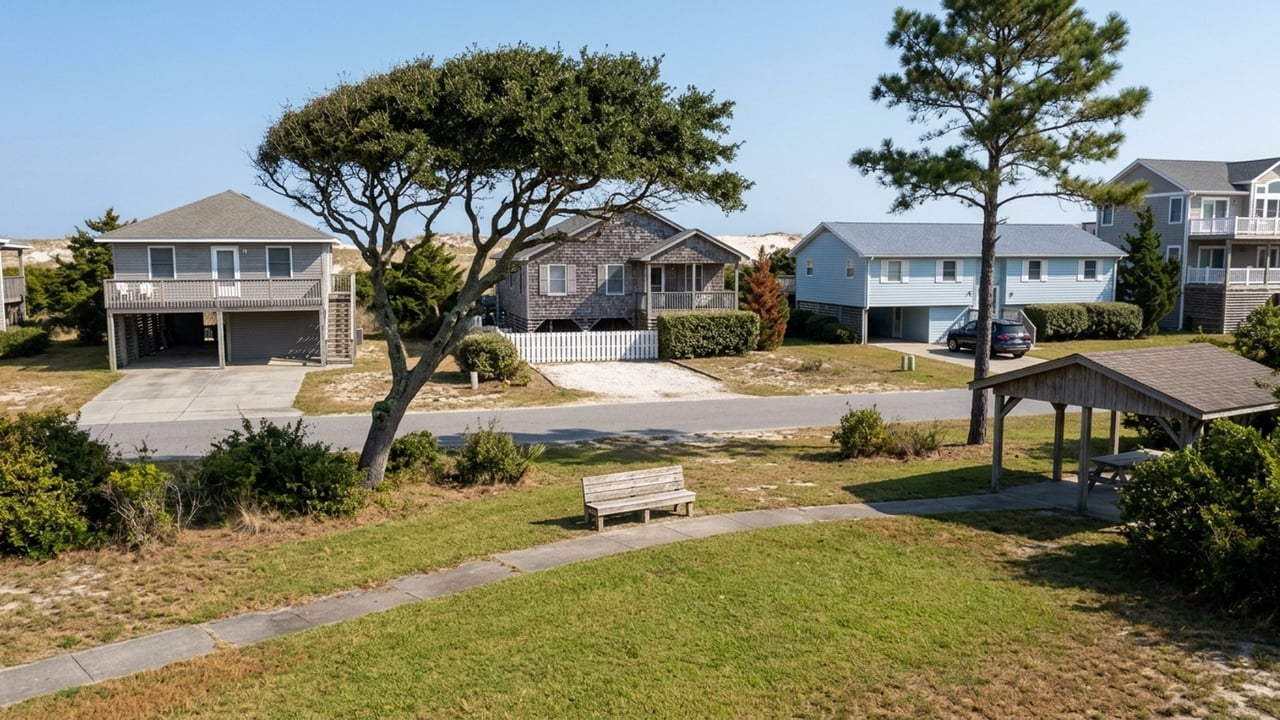
Buying a home on the Outer Banks involves specific coastal factors you won't find in an inland market. You need someone who understands wind policies, septic permits, and vacation rental laws just as well as they understand pricing.
The right representation depends on an agent's recent results and local due-diligence practices. A solid agent will protect your earnest money and help you negotiate in a shifting market.
Key takeaway
Hire the buyer's agent who can show how they negotiate below asking and vet flood, septic, and rental history on Outer Banks homes, instead of the one with the most reviews. With 6.4 months of supply across the Kill Devil Hills metro area, buyers have room to negotiate. If you're buying a former vacation rental, give equal weight to an agent's experience with rental records.
Who this guide is for
You're starting to shop for a home in the Kill Devil Hills area and deciding which buyer's agent to hire and what agreement to sign before you tour.
Why the Kill Devil Hills market changes what you need from an agent
With homes in the Kill Devil Hills metro area taking a median 71 days to sell, the buyer's agent worth hiring is the one who can show how they negotiate below asking and vet Outer Banks risks like flood elevation, septic limits, and existing vacation bookings. You're looking for specific coastal transaction skills, rather than the agent with the highest review count or the most active listings.
With a sale-to-list ratio of 96.3%, buyers are successfully negotiating discounts. For illustration only: on a home listed at $700,000, that ratio works out to about $674,100, which is roughly $25,900 under asking.
A buyer's market gives you an advantage, but you need an agent who knows how to use it. The right agent will use days on market and recent comparable sales to build an offer that gets you a better price without losing the home.
How buyer's agency works in North Carolina
North Carolina requires agents to disclose your representation options at first substantial contact. The buyer agency agreement sets the contract terms you should compare across agents, rather than their personality.
The state sets specific rules for how and when an agent can represent you. These regulations determine your flexibility and the level of exclusive representation you receive.
The Working with Real Estate Agents disclosure
North Carolina agents must hand buyers the "Working with Real Estate Agents" brochure at first substantial contact. This is a state-required disclosure that explains your agency options, not a binding contract. Use the moment it's handed over to ask exactly which kind of agency the agent is offering you.
Signing that you received the brochure commits you to nothing, but some buyers mistake it for the agency agreement and stop reading. The real terms that govern your relationship are in the next document.
The written buyer agency agreement
Real estate rules now require you to sign a written buyer agency agreement before an agent can show you a property. This contract sets the length of your relationship, the geographic area or property types it covers, whether it's exclusive, and how the agent is compensated. Every one of those terms is negotiable, so ask about them during your interview.
You can ask for a short first term or a single-property agreement instead of a months-long exclusive one. A broad area and a long term can leave you owing a fee even if you find the home yourself. Read the termination terms before you sign anything.
Dual agency and designated agency
If you want to buy a home listed by your agent or their brokerage, you enter either dual agency or designated agency. North Carolina allows dual agency, where one agent represents both sides, but they have limited loyalty to each and can't advise on price. Designated agency is a modified setup where two separate agents from the same brokerage can each fully represent one side of the same sale.
In this market, many agents list as well as sell, so ask how their firm handles these situations upfront. Under dual agency, your agent can't push the seller on price or pass along what they know about the seller's position. What you give up is negotiating power exactly when it matters in a below-list market.
How buyer's agents get paid
Agent compensation is fully negotiable and must be written into your signed buyer agreement. Sellers may still offer to pay some or all of it, and in a market where homes close below list price, asking for a seller concession toward the fee is a realistic strategy. Include this in your closing costs calculations.
If the seller won't cover the fee, the agreement decides whether you owe the difference at the closing table. Ask each agent to walk you through that specific clause before you sign, so there's no surprise at closing.
Questions that test an agent's negotiating skill
Single-family homes in the Kill Devil Hills area recently sold for 96.2% of their list price. A shifting market requires an agent who can back up their pricing advice with hard numbers.
Ask these questions to see how they handle offers and counteroffers when homes sit on the market. You want evidence of below-list results rather than general claims.
How they price an offer on a home that has sat
Ask the agent to explain how they'd use days on market, recent price cuts, and comparable sales to set an opening offer. Single-family prices in the metro are down 6.8% from a year ago, which can make a seller's original list price stale. Request two or three recent buyer-side closes and ask how each final price compared with the list price.
If you want room to negotiate on a single-family home that's been on the market a while, start with agents who can show recent buyer-side closes below list price and explain their offer math. A lowball strategy can lose the home you most want, especially well-priced oceanside or new listings. A good agent should tell you when not to push.
What they ask the seller for besides price
Ask what non-price terms the agent regularly negotiates, such as the due diligence length, repair credits, and contributions toward the buyer-agent fee. The North Carolina due diligence period gives the buyer an advantage to renegotiate after inspections, so a skilled agent will use this time to protect your interests.
In North Carolina, the due diligence fee generally goes to the seller even if you walk away during the due diligence period. Concessions you win on paper can shrink if appraisal or inspection issues come up late, and the due diligence fee is money at risk if you cancel.
Questions that test coastal due diligence
Dare County is one of 18 coastal counties covered under the state's windstorm insurance pool, meaning standard homeowners policies in these areas often exclude wind and hail coverage. Property on the Outer Banks carries risks like flooding, wastewater capacity, and seasonal rental rules.
Your agent needs to know how to investigate these specific issues before your due diligence period expires. Find out whether the agent knows Outer Banks property risks well enough to catch them early.
Flood zone and elevation checks
You can look up a property's flood zone yourself on the state's flood risk site before you ever call an agent. A strong agent, though, pulls the flood zone by address and requests the elevation certificate from the Town of Kill Devil Hills records before you write an offer.
You'll also need to get flood and wind insurance quotes during the due diligence period. A flood zone label alone doesn't set your insurance cost. Without the elevation certificate and real quotes, a home that looks affordable can carry a premium that changes your budget entirely.
Septic systems and older beach construction
Ask how the agent checks septic permits through Dare County Environmental Health and whether they recommend separate septic and wind-mitigation inspections on older cottages. A home's septic permit can cap its legal bedroom count, which matters if the listing advertises more bedrooms than the permit allows.
Permit records can be incomplete for older homes. Treat the agent's answer as a starting point and have the septic system professionally inspected during due diligence.
Homes with vacation rental history
Many homes here have a vacation rental history, and under North Carolina's Vacation Rental Act, existing guest bookings can carry obligations past the sale. Ask whether the agent can get rental income records, explain what happens to future bookings after the sale, and spot the gap between gross bookings and net income after management fees.
Past rental income isn't a forecast. Bookings, fees, and occupancy taxes can change, and inheriting reservations can block your own use in your first season. An agent who can walk you through all of that before you sign is worth the extra interview time.
How to narrow your shortlist of buyer's agents
Only 5.7% of homes in the Kill Devil Hills metro area recently sold above their list price. Once you've interviewed a few candidates, compare their answers against your specific property goals.
If the home has been rented to vacationers, put the most weight on how an agent handles existing bookings and income records. If the property is oceanside, soundside, or in a mapped flood zone, use flood elevation and septic capacity as your main screening questions. If you expect to negotiate on price or terms, look closely at how they price an offer on a home that has sat and what they ask the seller for besides price. And if you want representation no one else in the transaction shares, ask how the firm handles designated agency before you sign the buyer agreement.
There are a few patterns worth watching for during interviews. An agent who treats over-ask offers as routine is out of step with the current market. Pressure to sign a long, broad exclusive agreement before they've answered fee questions is a problem. So are vague answers on how their brokerage handles dual agency.
Ask each agent for two or three recent buyer-side closings, and request the elevation certificate and septic permit for any home before due diligence ends.
At a glance
- Median sale price, All homes: $658,488 (30 days ending 2026-09-30, Kill Devil Hills metro area)
- Median sale price, Single family: $675,881 (30 days ending 2026-09-30)
- Year-over-year change in median sale price, All homes: -1.2% (30 days ending 2026-09-30)
- Year-over-year change in median sale price, Single family: -6.8% (30 days ending 2026-09-30)
- Homes sold, All homes: 108; Single family: 96 (30 days ending 2026-09-30)
- Median days on market, All homes: 71; Single family: 69 (30 days ending 2026-09-30)
- Sale-to-list ratio, All homes: 96.3%; Single family: 96.2% (30 days ending 2026-09-30)
- Share sold above list, All homes: 5.7%; Single family: 6.4% (30 days ending 2026-09-30)
- Months of supply, All homes: 6.4; Single family: 5.9 (30 days ending 2026-09-30)
- Homes for sale (inventory), All homes: 693; Single family: 569 (30 days ending 2026-09-30)
- Median price per square foot, All homes: $359; Single family: $360 (30 days ending 2026-09-30)
Kill Devil Hills buyer's agent FAQs
Is a buyer's agent necessary to buy a home in Kill Devil Hills?
North Carolina doesn't require buyers to have an agent, but the listing agent works exclusively for the seller. Without your own agent, no one in the deal is obligated to negotiate for you or flag flood and septic issues.
Does a buyer's agent attend closing in North Carolina?
North Carolina real estate closings are handled and supervised by a licensed closing attorney, so the agent's presence is customary but not legally required. Ask your agent whether they attend closings in person, or how they handle final walkthrough issues if you close remotely.
How many buyer's agents should I interview?
Interview agents until you can compare at least two different answers to the negotiation and coastal due-diligence questions covered on this page. Speaking with multiple agents ensures you find someone who understands local pricing and property risks.
What happens to my due diligence fee if I cancel in North Carolina?
The due diligence fee is not refundable; read the termination clause and the due diligence deadline carefully before signing any agreement.
What termination rights do I have under a North Carolina buyer agency agreement?
You can formally end the relationship early using a specific termination and release form, which releases both parties from further obligations. Any protection period obligations defined in the original agreement stay in force for the specified time, though, and you may have to reimburse the firm for expenses. Read the termination clause before signing any agreement.
How do I verify a Kill Devil Hills real estate agent's license and disciplinary history?
You can look up an agent on the North Carolina Real Estate Commission's official online Licensee Database. This tool shows their license status, license type, and any disciplinary history on record. Confirm the name on the buyer agreement matches the license.
Can I work with a Kill Devil Hills buyer's agent if I'm buying from out of state?
Yes, showings can happen by video, agreements can be signed electronically, and North Carolina permits remote electronic notarization for closings. Ask the agent how they handle remote inspections, the final walkthrough, and due-diligence deadlines when you can't be there in person.
Sources
- Redfin: Data Center
- NC Real Estate Commission: Working with Real Estate Agents Disclosure
- NC Real Estate Commission: Buyer Agency Agreements
- NC REALTORS: Designated Agency
- NC Real Estate Commission: 2025 Year in Review
- NC REALTORS: Standard Form 201
- Dare County: FRIS Link
- Town of Kill Devil Hills: Flood Information
- NC Department of Insurance: Windstorm and Hail
- Dare County: Permits
- NC General Statutes: Chapter 42A, Article 3
- NC General Statutes: Chapter 10B, Section 134.25
- North Carolina Real Estate Commission: Licensee Lookup
- NC General Statutes: Chapter 10B, Article 2