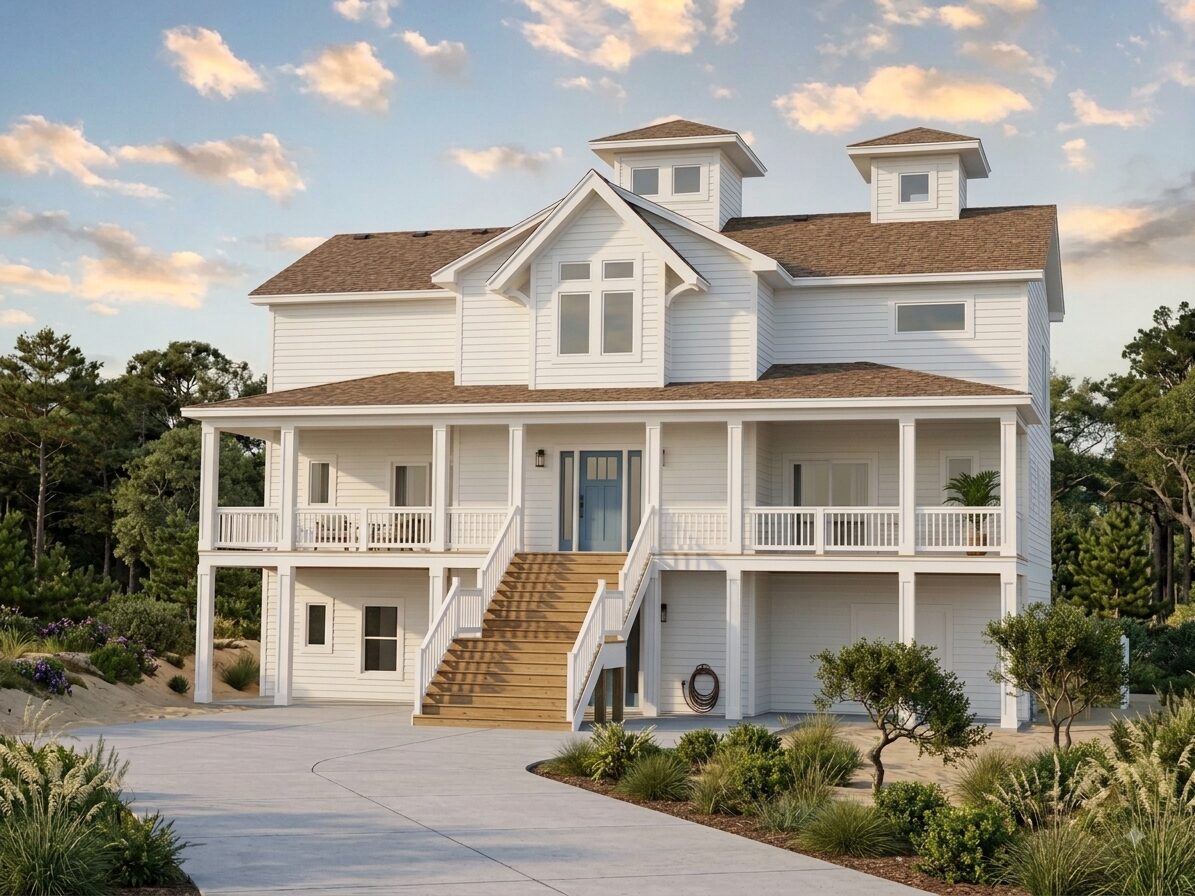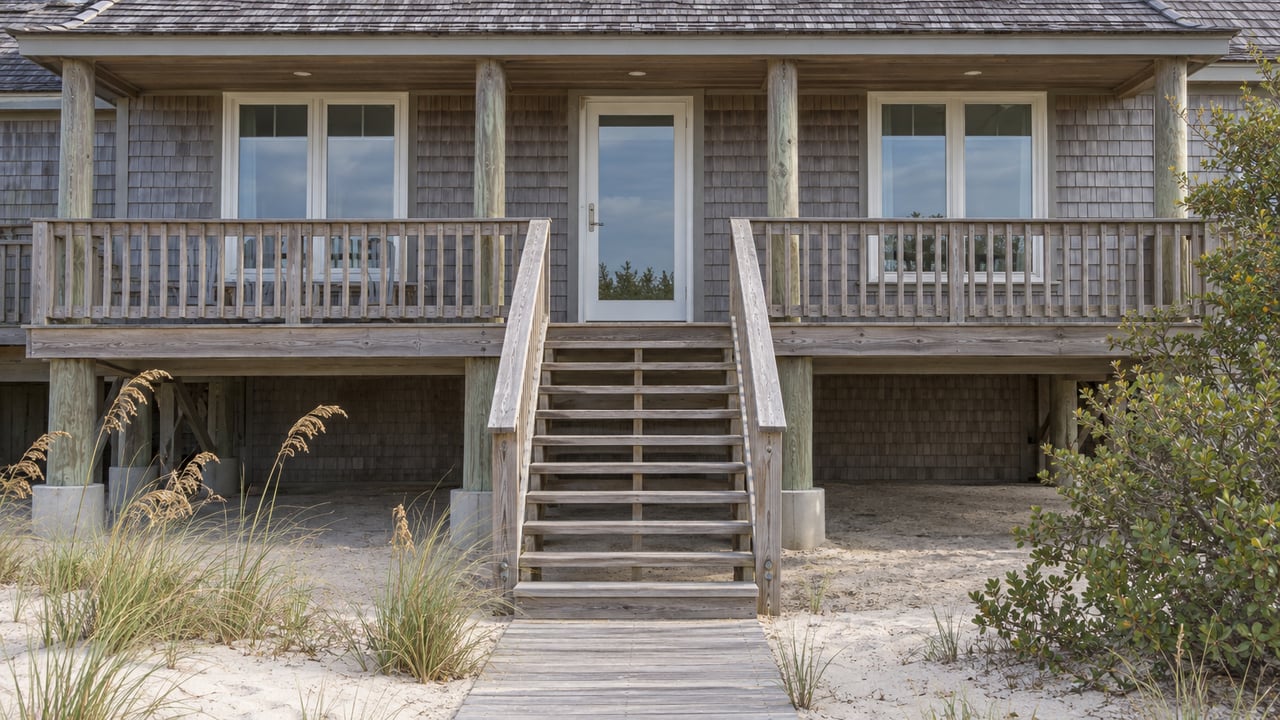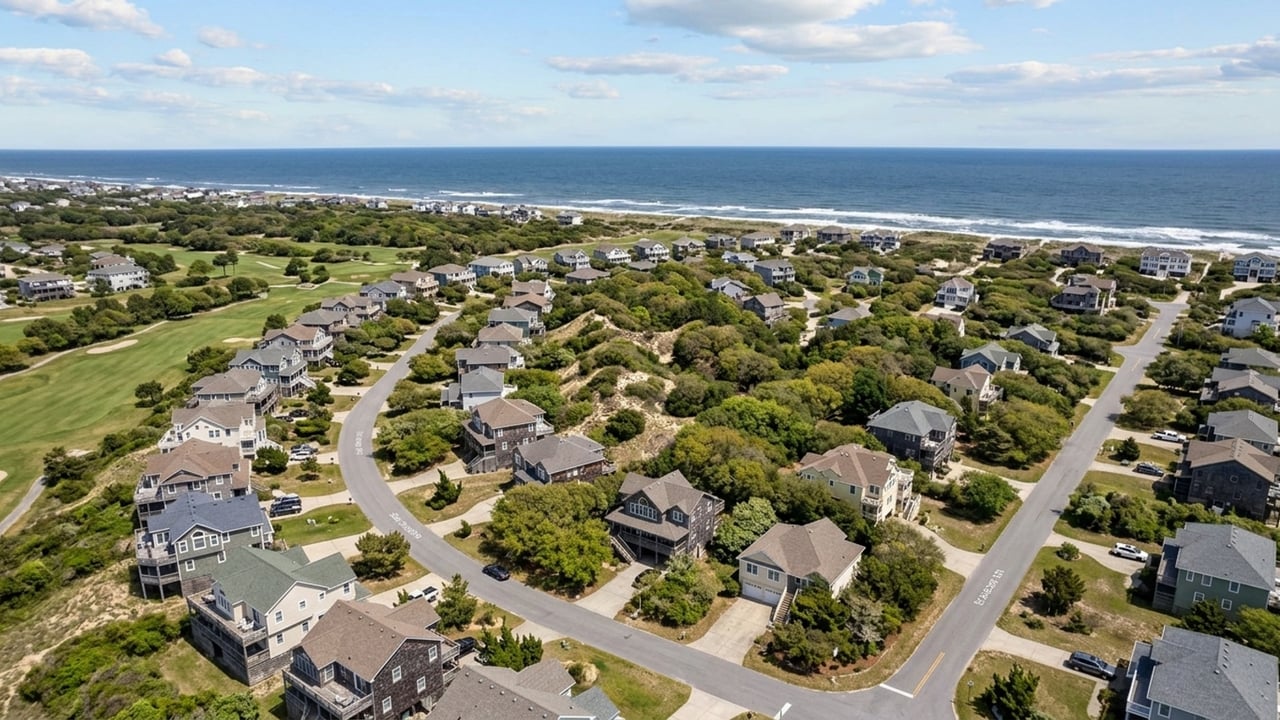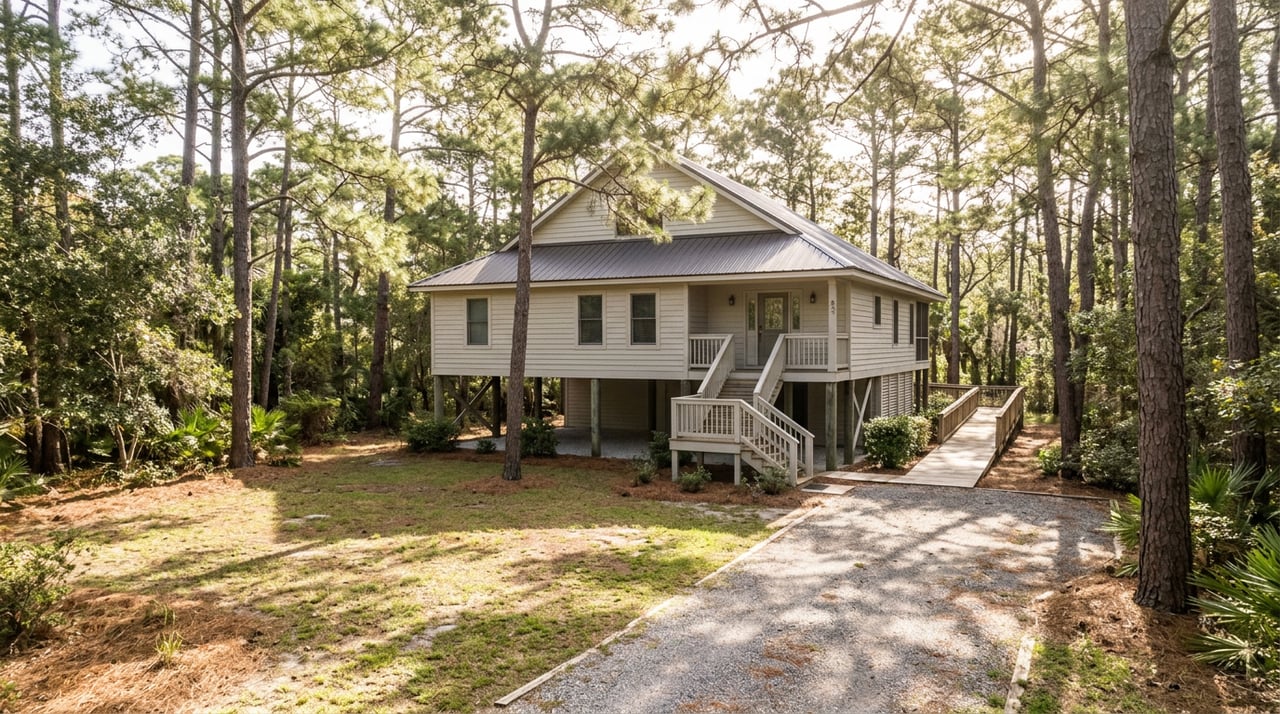
Picture two houses on the same Southern Shores street, listed within a week of each other, roughly the same square footage, roughly the same price. One comes with a laminated card in the kitchen drawer explaining how to use the neighborhood's beach walkovers. The other doesn't, because the seller never joined the association that controls them. Nothing on either listing sheet flags the difference. Nothing in the appraisal touches it. But six months after closing, one owner is walking a sandy path to the ocean every morning and the other is driving to a town-owned lot with 135 spaces, hoping one is open.
That gap is the part of Southern Shores that a median price can't explain, and it's worth understanding before you write an offer here.
The town doesn't own the beach access. Two private associations do.
Southern Shores runs 4.2 miles along the oceanfront with no public street access to the beach at all. The town says so plainly on its own site: it does not own or control any access points from a public right of way to the ocean. The only exception is emergency response, where the town has permission to use three private accesses for that limited purpose.
Everything else runs through two separate nonprofit associations, and they don't share.
The Southern Shores Civic Association, running since 1976, maintains 33 walkovers and dune crossovers across the broader town. Property owners can join and, in doing so, extend that access to themselves and their guests. Separately, the Chicahauk Property Owners Association maintains its own lot and its own membership, but only for homes inside the Chicahauk section of town, a distinct neighborhood within Southern Shores rather than the whole community. A home a few streets outside Chicahauk's boundary simply isn't eligible for that association's access, no matter how much its owner would like to join.
Then there's the town's own system, which is neither association. Southern Shores issues beach access parking permits at no charge, capped at 135 spaces townwide, with a maximum of two permits per property owner regardless of how many properties they hold. Those permits only work in town-owned lots. The town's rules make the boundary explicit: SSCA and CPOA permits are not valid in town-owned parking areas, and town permits don't work in either association's lots. Three separate systems, three separate rulebooks, and none of them recognize each other's paperwork.
Why this changes what "quiet and residential" actually means
Real estate write-ups about Southern Shores tend to land on the same two words: quiet and residential. Both are true. What they leave out is that the quiet comes with a logistics layer that Duck, its walkable neighbor to the north, simply doesn't have.
Over the three months ending May 2026, Southern Shores homes sold at a median of $747,000, down 7.3 percent from the same window a year earlier, with the median price per square foot at $341, also down over the year. Homes were moving faster than they had been, averaging 68 days on market compared with 98 days the year before, though the pace of sales itself slowed slightly, with 23 homes sold in May 2026 against 30 in May 2025. Zillow's separate estimate, updated at the end of July 2026, put the town's average home value at $814,029, essentially flat year over year.
Duck, three miles north, tells a different story in the same window. The median sale price came in at $983,000, down a steeper 10.6 percent year over year, but the price per square foot actually rose 15.7 percent to $500. Days on market stretched to 99, up slightly from 96 the year before.
Read those two data sets side by side and the obvious conclusion is that Southern Shores is the value play. But value relative to what. Duck's price per square foot climbed while its total price fell, which points to smaller, walkable properties commanding a premium even as larger ones took longer to move. Duck's whole model is proximity: a boardwalk, a town park, restaurants and shops within a short walk, all of which the price is quietly pricing in. Southern Shores doesn't have that walkable core to price in. What it has instead is larger lots, mature tree cover, and a beach you reach through a permission system tied to the specific parcel you buy.
So the price gap between the two towns isn't simply "busy costs more." It's closer to a swap: you're trading a public-facing village life for a private, deed-linked one, and the difference in convenience needs its own line of due diligence, separate from square footage and separate from the comps.
What to ask before you write the offer
None of this makes Southern Shores a harder place to love. It makes it a place where the beach access question needs to be asked directly, the same way you'd ask about a well, a septic system, or an HOA fee. Before you get attached to a house here, find out:
- Is the property currently a member of the Southern Shores Civic Association, and does that membership convey with the sale or does the buyer need to apply and pay dues separately?
- Is the property inside the Chicahauk section, and if so, is it enrolled with the Chicahauk Property Owners Association?
- If neither membership applies, is the property within reasonable walking or biking distance of a town-owned beach access lot, and realistically, how often are those 135 permit spaces full during the season you plan to use the house most?
- Do the association's amenities beyond the beach, things like Trinitie Park, Soundview Park, Sea Oats Park, and Triangle Park, matter enough to your daily use that membership is worth budgeting for even where it isn't required?
None of these are yes or no questions with a single right answer. They're the kind of thing that changes how a specific house fits a specific family, which is exactly why they get skipped in a general listing and exactly why they shouldn't be skipped by you.
A softer market is a better time to ask
Both towns are showing the same broad pattern this year: prices easing back from their highs, inventory taking a little longer to clear. That's not bad news for a buyer willing to do homework. A market with more breathing room is a market where you can reasonably ask a seller to document association status in writing, request confirmation from the Southern Shores Civic Association or the Chicahauk Property Owners Association directly, and build a few extra days into your due diligence period to sort it out. In a market where homes moved in three weeks, nobody had time for that conversation. Right now, most sellers do.
If you're weighing Southern Shores against Duck, or against any of the towns further up or down the beach road, the honest advice is the same advice I'd give a friend: don't let the sticker price make the decision for you. Ask what that price is actually renting you access to, in writing, before you're past your inspection window.
A couple of quick answers
Does every home in Southern Shores come with beach access built in? No. Access depends on whether the specific property carries Southern Shores Civic Association membership, Chicahauk Property Owners Association membership if it's inside that section, or neither, in which case you're relying on the town's capped permit system.
Can I just join the Civic Association myself if the house I want doesn't have membership? Often yes, but confirm it during due diligence rather than assuming it. Reach out to the association directly for current membership terms, since dues and eligibility can change year to year.
Beach access is the kind of detail that only shows up once you're standing in the house asking the right questions, which is a big part of why buyers in this stretch of the Outer Banks tend to want someone local walking the process with them. If you're comparing Southern Shores to its neighbors and want a straight answer about what a specific property actually includes, Cameron Griggs has spent years sorting exactly this kind of detail out for buyers before it becomes a surprise at closing. Let's Connect.