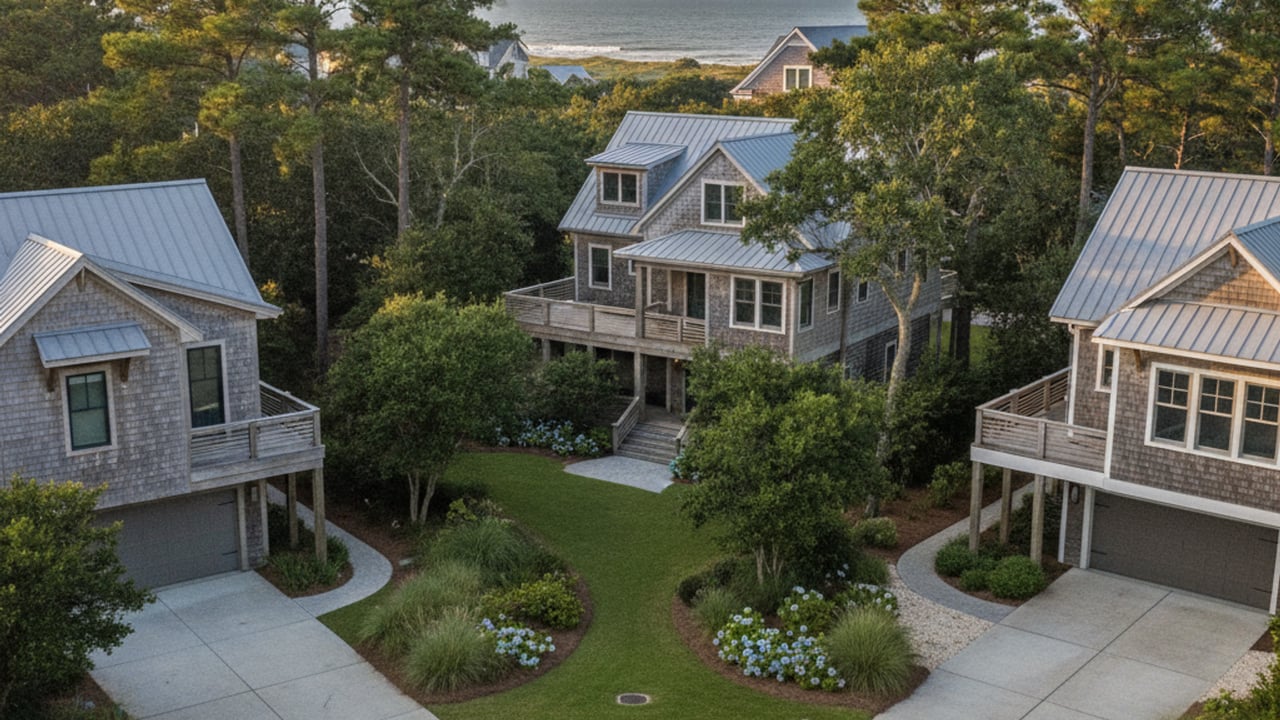
The median home sale price in Kitty Hawk, NC, sits around $720,000 right now. Whether that fits your budget isn't something you can answer by looking at the listing price alone - you need to work through your specific financial picture. This is especially true for first-time home buyers in Kitty Hawk.
Coastal real estate carries monthly expenses that inland properties simply don't have. Your real purchasing power only becomes clear once you've factored in local tax rates, specialized insurance policies, and current mortgage guidelines.
Local Pricing and Ownership Costs in Kitty Hawk
Before you touch a mortgage calculator, it helps to understand what the Outer Banks market actually costs to own. Buyers get fixated on the principal and interest payment, which is understandable, but local taxes and insurance make up a bigger slice of your monthly housing bill than most people expect going in.
Kitty Hawk has a fairly distinct financial profile compared to the rest of North Carolina. Property values run higher than the state average, but the local tax structure provides some relief against the elevated cost of coastal insurance.
Kitty Hawk Home Prices and Market Pace
As of mid-2026, the median sale price in Kitty Hawk runs roughly $720,000. There are currently about 42 homes for sale, which gives buyers a reasonable pool to work through.
Homes are averaging 114 days on the market before closing. They're selling for about 97% of list price - sellers will negotiate a little, but don't expect dramatic discounts.
Dare County Property Taxes and Coastal Insurance
Dare County's effective property tax rate is relatively low at roughly 0.52% to 0.53%, which falls below the North Carolina state average of 0.64% to 0.70%. At current values, the median annual tax bill runs somewhere between $2,245 and $2,391.
Insurance is the line item that surprises people. Dare County averages about $6,242 per year for homeowners insurance, which makes it one of the most expensive counties in North Carolina for coverage. Standard North Carolina policies average closer to $2,874 to $3,124, but Kitty Hawk's location requires specialized wind, hail, and flood coverage that pushes that number up considerably. Budget for it from the start.
Figuring Out Your Buying Power
Lenders use standardized formulas to determine how much they'll loan you. These calculations exist to protect both the bank and the borrower by keeping monthly payments manageable over the long run.
You can get a realistic sense of your approval odds by running the same numbers underwriters use. The core metrics compare your gross monthly income against your existing debts and projected housing costs.
Using the 28/36 Rule
The 28/36 rule is the framework most mortgage lenders start with. The 28 means your total housing costs - mortgage, taxes, insurance - shouldn't exceed 28% of your gross monthly income. The 36 means your total monthly debt load, that housing payment plus car loans, student loans, and minimum credit card payments, shouldn't exceed 36% of gross income.
It's a simple benchmark, but it does a decent job of telling you where the ceiling is before you start falling in love with houses.
Calculating Your Debt-to-Income Ratio
Your debt-to-income ratio, or DTI, is how lenders actually apply that 28/36 framework. Divide your total monthly debt obligations by your gross monthly income and you've got your DTI.
The traditional ceiling is 36% for total debt, though some loan programs will allow a DTI up to 43% or higher. Staying toward the lower end leaves you room to absorb unexpected costs - and on the Outer Banks, unexpected costs are part of the deal.
Down Payments and Closing Costs in North Carolina
Getting to the closing table takes more than a down payment. You'll also need liquid funds to cover the administrative and legal fees tied to transferring title and setting up the loan.
Knowing these numbers in advance avoids the kind of last-minute scramble that derails deals. Your lender won't clear the loan to close until those funds are confirmed and ready.
Down Payment Expectations and Assistance
A 20% down payment eliminates private mortgage insurance, but plenty of buyers purchase homes with significantly less. If you're a first-time buyer in North Carolina, the NC Housing Finance Agency (NCHFA) offers programs worth knowing about.
The NC 1st Home Advantage Down Payment program offers up to $15,000 in forgivable assistance for first-time buyers and veterans. The NC Home Advantage Mortgage provides down payment assistance up to 3% of the loan amount. Both programs were recently updated to allow buyers earning up to $158,000 to qualify.
Estimating Closing Costs
Closing costs in North Carolina generally run 2% to 5% of the purchase price. On a median-priced $720,000 home in Kitty Hawk, that's somewhere between $14,400 and $36,000 - a wide range, but you should plan for the higher end until your lender gives you a loan estimate.
That total covers lender origination fees, title insurance, and prepaid items like your first year of homeowners insurance. The state's recording fees and taxes average about 0.56% of the sale price, which is relatively low compared to the national average.
Ongoing Expenses to Factor Into Your Budget
The mortgage payment is just the beginning. Owning on the Outer Banks comes with recurring costs that don't show up in any listing, and if you don't account for them upfront, they'll find you later.
Homeowners Association Dues
Many neighborhoods and condo complexes in Kitty Hawk are governed by a homeowners association. Fees vary widely depending on the community's amenities and what exterior maintenance the association covers.
Lenders fold your monthly HOA dues into your debt-to-income ratio, so high dues directly reduce the loan amount you can qualify for. Run those numbers before you fall hard for a community, not after.
Routine Maintenance and Utility Bills
Salt air and coastal storms are harder on a building than most buyers fully appreciate until they've owned on the water for a year. Set aside funds annually for power washing, painting, and HVAC servicing - it's not optional maintenance out here, it's just the cost of owning.
Utility costs also swing significantly with the seasons. Ask sellers for a 12-month utility history before you close, so you actually know what it costs to heat and cool the home year-round.
Frequently Asked Questions
What salary do I need to afford an average-priced home in Kitty Hawk right now?
It depends on your current debts and down payment. With a median sale price of $720,000, coastal insurance premiums averaging $6,242 per year, and current interest rates, most buyers need a six-figure household income to keep housing costs under 28% of gross earnings.
How much do flood and wind insurance policies add to my monthly mortgage costs in Kitty Hawk?
Substantially. Dare County homeowners pay an average of $6,242 per year for insurance, which breaks down to roughly $520 per month added to your mortgage escrow account.
Can I use projected vacation rental income to help qualify for a larger mortgage in Kitty Hawk?
It depends on the lender and the loan program. While Kitty Hawk is a popular vacation destination, underwriters have specific rules about counting projected rental income toward your debt-to-income ratio. Ask your loan officer directly what documentation they require - the answer varies.
How do Kitty Hawk property taxes compare to neighboring Outer Banks towns when calculating my maximum budget?
Kitty Hawk shares the same base Dare County property tax rate of 26.32 cents per $100 of assessed value. The county's overall effective rate runs around 0.52% to 0.53%, keeping the median annual tax bill around $2,245 to $2,391. Municipal rates can cause slight variations between towns.
Does buying a second home or investment property in Kitty Hawk require a larger down payment than a primary residence?
Yes. Primary residence buyers may qualify for North Carolina Housing Finance Agency programs with down payments as low as 3%, but lenders typically require at least 10% to 20% down for second homes and investment properties.
How fast do I need a pre-approval letter to compete for a house in the current Kitty Hawk market?
Get it before you start touring homes. Kitty Hawk properties are averaging 114 days on the market and selling for about 97% of list price, so the pace isn't frantic - but having your financing in order when you make an offer still tells the seller you're serious and ready to close.