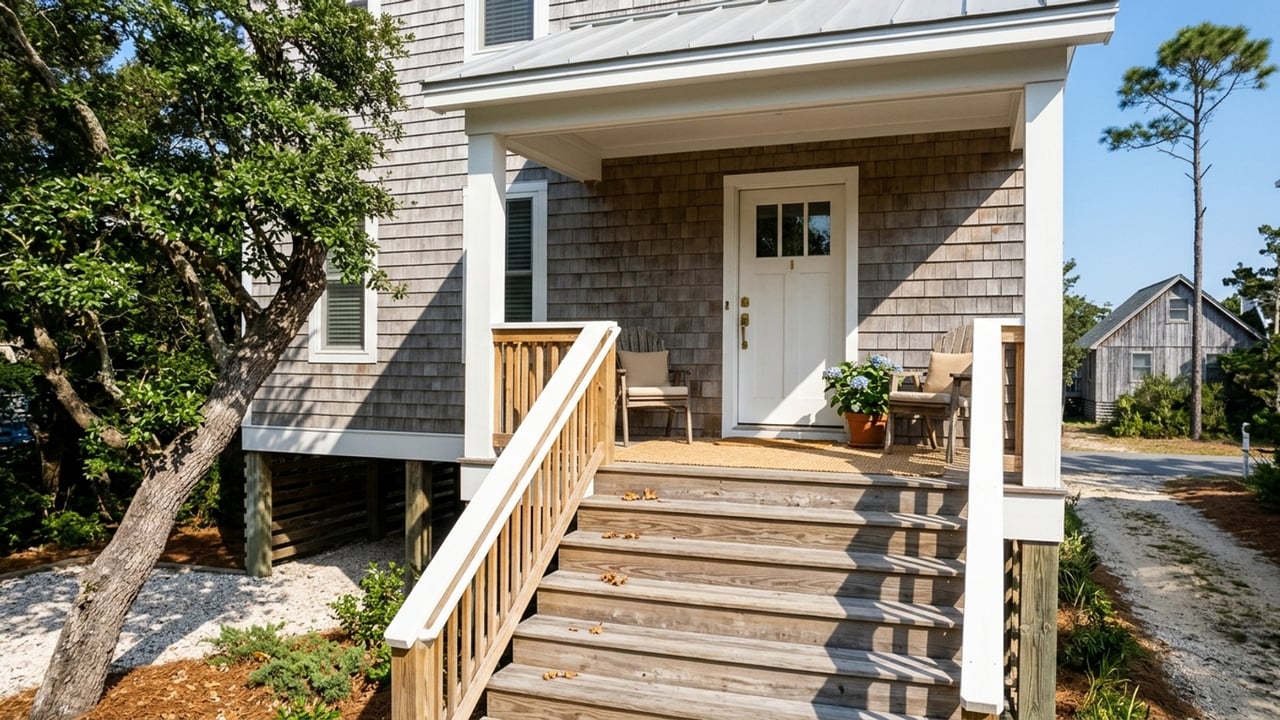
Single-family homes in Southern Shores took a median of 80 days to sell over the 90 days ending September 30, 2026. This is a negotiated market, not a frenzied one, and that changes how staging should work.
Key takeaway
Targeted staging pays off for most Southern Shores sellers. Focus on editing furniture, cleaning salt from windows, and dressing the decks and main living floors. With 29 active single-family listings, buyers are comparing your property against real alternatives right from the listing photos. Full professional staging earns its cost primarily on vacant homes that would otherwise photograph empty, while occupied homes can usually reach the same standard with a stager consultation and some do-it-yourself work.
Who this guide is for
You're preparing to list a home in Southern Shores and deciding whether staging is worth the money and how much of it to do.
Is home staging worth it in Southern Shores?
In a bidding-war market, staging tries to trigger escalation clauses. Here, its job is to compete for attention and protect price by giving buyers fewer reasons to ask for a discount.
The median sale price for a single-family home in Southern Shores was $830,919 over the 90 days ending September 30, 2026. At that price point, conceding just one percentage point during buyer negotiations costs you roughly $8,309. When homes sit for nearly three months, buyers have time to build a case for a lower offer, and a well-staged property gives them less material to work with.
What recent sales say about staging here
Sellers closed at 96.8% of their asking price. Only about 6.3% of homes, roughly 1 of the last 16 single-family sales, sold above list. In that environment, staging has two jobs: win the first look online, then give buyers fewer reasons to chip away at the price once they tour in person. Skipping it gives up a chance to stand out.
Sixteen sales over 90 days is a small sample, and one unusual transaction can swing these medians. Treat them as a read on the market's current mood rather than a forecast. Pricing should follow the latest market trends at the time you list, since new sales can shift them.
Sizing the staging spend against time and price
According to HomeAdvisor's 2025 cost data, homeowners spend an average of $1,849 on professional staging nationally, with most projects ranging from $832 to $2,927. Staging can cover its own expense if it helps you avoid one point of a price cut on a home near that median, or saves you one extra month of carrying costs.
Add up your monthly mortgage, insurance, and utilities, and put the total next to a staging quote before you decide. No local data shows that staging shortens time on market or raises price in Southern Shores specifically. Treat this as a break-even point rather than a guaranteed return.
How to decide what your home needs
Three answers tell you which sections to read and which to skip.
Occupancy: A vacant home usually needs full professional staging. If you live in the home, a stager consultation and your own labor fit better. If it's in a rental program, the furnished vacation rental approach applies.
Furniture condition: If your existing furniture is dated, worn, or rental-grade, look at the vacation rental and full staging options. If it's in good shape, DIY staging is likely enough.
Selling points: If the home's appeal depends on a view, a deck, or an older cottage's character, start with the coastal staging tips before spending money on furniture.
If a long listing period would strain your finances, run the numbers above before you commit to a monthly furniture rental.
Choosing how much staging to do
HomeAdvisor reports that renting furniture for an empty house costs an average of $500 to $600 per room per month. Homeowners who rent spend an average of about $2,000 per month overall. That recurring cost makes the staging level a financial and aesthetic decision.
Full professional staging for a vacant home
Empty rooms photograph small and cold, and buyers scrolling through dozens of listings skip them quickly. A professional stager brings furniture, art, and linens for the main living floor and primary bedroom, the combination that does the most for listing photos. This approach suits vacant second homes or properties the owners have already moved out of.
The catch is the ongoing cost. Most staging contracts keep billing a monthly furniture rental fee after the initial term, so a slow sale keeps the charges coming. At the local median listing time, that monthly rental can exceed the initial installation fee. Ask your insurer whether rented staging furniture is covered before you sign, since a vacant home may trigger a vacancy clause in your policy.
A stager consultation and partial staging for an occupied home
If you live in the home, a one-time walkthrough with a stager gives you a room-by-room list of what to remove, rearrange, and borrow or buy. Partial staging adds a few rented pieces only where your furniture falls short.
Upfront costs stay low. The catch is that you have to live around the edits and keep the home show-ready for as long as it's listed, which here can mean months.
DIY staging
Doing the work yourself is the lowest-cost route and works when your furniture is already in good shape. It means decluttering, depersonalizing, cleaning deeply, neutralizing bold paint colors, and renting a storage unit for the overflow.
The catch is that owners rarely see their own home the way a buyer does. Without an outside eye, DIY staging often stops at basic tidying and misses higher-impact layout and lighting fixes.
Virtual staging for listing photos
Digitally furnished photos are the cheapest way to make empty rooms read well online, where buyers compare homes first. This method works best for vacant homes when the budget is tight or the timeline to list is short.
The catch shows up at the showing. Buyers who tour in person will walk into empty rooms that don't match the listing photos, which can feel like a bait-and-switch. Managing that expectation is the real cost of this approach.
Staging a furnished vacation rental
Rental-furnished homes usually need editing more than they need new furniture. Remove house-rules binders, lockboxes, rental signage, extra bar stools, and duplicate beach gear so the home reads as a place to own, not a place to book. Decide early which furnishings convey with the sale and list them clearly in the contract.
The catch is scheduling. Booked weeks limit your showings, and guest wear and tear can undo your staging between tours. Read your rental management contract for owner-block, cancellation, and termination terms before you schedule any showings.
Coastal staging tips for Southern Shores homes
Coastal buyers pay a premium for outdoor living spaces and natural light, and salt air and coastal weather work against both.
Decks, porches, and the yard
Stage decks and porches like interior rooms, with clean seating, an outdoor rug, and a cleared outdoor shower area. Tidy sandy or wooded yards without stripping them bare. Check with the Town of Southern Shores before removing trees or major vegetation, since the Town adopted zoning amendments on tree removal in the commercial district and emergency tree removal in 2024.
The downside is that staging draws the eye to weathered deck boards and loose railings, and those will surface in the inspection anyway. Get a deck repair estimate early so the number isn't a surprise, and make the repairs before you stage.
Windows, views, and salt film
Salt film dulls both natural light and the ocean or sound views that show up in listing photos. Hiring a professional window cleaner and arranging furniture to face the view are among the cheapest, highest-impact moves you can make.
The downside is that salt film returns quickly near the ocean. Time the cleaning right before the photographer arrives, and get a quote that includes a second round in case the listing runs long.
The main living floor and kitchen
Put your staging money on the floor where buyers spend the most time, which in many reverse-floorplan beach homes is an upper level. Clear the counters, open up the sightlines, and remove anything that blocks natural light or traffic flow.
The downside is that a dated kitchen stays dated however well it's staged. Staging can frame an older kitchen, but your asking price still needs to reflect the room's actual condition.
Bedrooms and bunk rooms
Pare rooms packed with beds for rental capacity back to a layout that shows off the floor space. Keep one bunk room if it fits the home's coastal appeal, and give each remaining bedroom a clear, single purpose.
The downside is that removing beds can make the home look less suited to rental income, which matters if your likely buyer is an investor. Decide which kind of buyer the home suits before you edit, and keep a record of the full rental setup to share with buyers who ask.
Older flat-top cottages
Southern Shores' flat-top cottages were first introduced in 1952 by Frank Stick and the Kitty Hawk Land Company. Show off original character, such as flat roofs, exposed wood, and cottage scale, instead of trying to disguise it. Light, simple furnishings suit these historic homes far better than oversized, modern pieces.
The downside is that staging won't hide age-related systems or structural wear, and anyone shopping for an older cottage will look for them. Let the staging sell the architectural character and the disclosure statement cover the condition.
Odors, humidity, and sand
Closed-up beach houses often smell musty after a few weeks. Run dehumidifiers and the HVAC system ahead of showings, replace air filters, launder the soft furnishings, and keep sand out of the entryways.
The downside of a quick fix is that masking a musty smell with heavy fragrance draws immediate suspicion of hidden moisture problems. Find and fix the source of the humidity, and disclose any known moisture issues to buyers.
How to find and hire a home stager near Southern Shores
Fees fall across the national cost range above, so the key question for each stager is exactly what their fee covers.
What to look for in a stager
Look for experience with coastal and vacation homes, a strong portfolio of Outer Banks listings, a furniture inventory suited to beach properties, and the capacity to install furniture on your timeline.
Directory listings frequently mix interior decorators with real estate stagers. A decorator designs for the owner's personal taste; a stager designs for buyers and the camera. Ask directly whether they're a stager or a decorator, and request photos of Outer Banks homes they've staged.
Questions to ask before you sign
Ask about the initial installation fee, what the monthly rental includes, and exactly when that recurring fee starts. Get clarity on removal timing once you're under contract, damage and insurance terms, and whether the stager coordinates directly with your listing photographer.
Get two or three written staging quotes that show the install fee, the monthly rental after the first term, and removal terms. Low installation quotes can hide high monthly rates or unusually short initial terms. Compare the total cost over a realistic listing period at the local median.
Get help preparing your Southern Shores home for sale
Cameron Griggs can walk through the home and help decide what to stage before listing. Staging is one step in the selling process. Choosing a listing agent who knows Southern Shores neighborhood prices by zone helps you weigh the staging spend against nearby sales.
At a glance
- Median sale price, single-family homes (90 days ending 2026-09-30): $830,919, down 1.7% year over year (based on 16 sales)
- Median days on market, single-family (90 days ending 2026-09-30): 80 days (based on 16 sales)
- Sale-to-list ratio, single-family (90 days ending 2026-09-30): 96.8% (based on 16 sales)
- Share sold above list price, single-family (90 days ending 2026-09-30): 6.3%, about 1 of 16 sales
- Months of supply, single-family (90 days ending 2026-09-30): 5.4
- Active inventory, single-family (90 days ending 2026-09-30): 29 homes
- Median sale price per square foot, single-family (90 days ending 2026-09-30): $316 (based on 16 sales)
- Small-sample note: all figures rest on 16 single-family sales, so one unusual sale can move a median noticeably
Southern Shores home staging FAQs
How much does home staging cost per square foot in Southern Shores?
No local per-square-foot data exists for Southern Shores. Quotes usually scale with the number of rooms staged rather than the total square footage of the house.
How much does home staging increase a home's value?
Per NAR's 2025 Profile of Home Staging, 17% of buyers' agents said staging resulted in a 1% to 5% increase in the dollar value offered compared to similar un-staged homes. Nearly three out of 10 agents overall reported a 1% to 10% increase, though these are agent perceptions rather than a guaranteed return.
What should I not do when staging my Southern Shores home?
Do not use decor to hide known defects like moisture stains or soft deck boards. Under North Carolina law, owners transferring property covered by Chapter 47E must complete the Residential Property and Owners' Association Disclosure Statement and give the buyer a copy. Your broker also has a separate duty to disclose material facts they know or reasonably should know.
How long does home staging take before I can list?
Vendors commonly cite 10 to 14 days from consultation to installation for a vacant home, with the installation itself taking one to three days, though no industry standard exists. Book the stager before the listing photographer, and confirm furniture delivery dates for vacant homes.
Is virtual staging allowed in Outer Banks listings?
Yes, but you must follow local MLS rules for disclosing digitally altered photos, so confirm the current labeling rules with your listing agent. Keep an unstaged photo of each room available in the listing so buyers know what to expect.
Can I keep renting my Southern Shores home while it's listed for sale?
It depends on your property management agreement, especially the owner-block and termination terms noted above. You'll also need to tell potential buyers about any future vacation bookings that may transfer with the sale.